Small nonprofits with big results
May 21, 2026 – Joanne Palmer, Jewish Standard
The force behind the Good People Fund retires after a career of betting on the right people
Naomi Eisenberger created an organization that funds small nonprofits.
It’s hard to imagine a more boring sentence than that one, right? I can feel readers’ eyes glaze over.
And boy, would they be wrong!
Wait. There’s more. Her nonprofit is called the Good People Fund. Saccharine, right?
Wrong again.
Sometimes a name is not ironic. Sometimes goodness is real. It’s palpable. Sometimes the funding takes an idea that might have been on life support and allows it to flourish and grow.
Ms. Eisenberger, who lives in Millburn, started the Good People Fund almost two decades ago. For most of those years, she was its only employee. In July, she’ll step down as its executive director to take emerita status.
The Good People Fund has a straightforward mission. It works with small organizations, the kind that often are founded, as Good People was, by one person with an idiosyncratic dream, often fueled by a very specific set of life experiences. The fund provides funding, of course — hence the name — but it also donates mentoring, connections, and community. It ensures that its recipients are honest, competent, compassionate, and mission-driven, and then does not entangle them in box-checking bureaucracy. And its values are deeply Jewish. They’re based in tikkun olam — the idea that we cannot perfect the world, but our job is to try to repair it.
In Ms. Eisenberger’s case, the repair is done one small nonprofit at a time.
Ms. Eisenberger came to the fund after a career as an entrepreneur and a volunteer. She grew up in Caldwell, where her family was among the founders of the then-small, now flourishing synagogue called Congregation Agudath Israel. When she and her family — her husband, Gerry, and their children, Andrew and Sara — settled in Millburn, they joined Congregation B’nai Israel. Soon, because Ms. Eisenberger is who she is, she became the shul’s president.
Through her connections to the Conservative movement, eventually she worked for the movement’s nearly legendary philanthropic soul, Danny Siegel, the not conventionally but still undeniably charismatic poet, writer, and activist. She began to work for his nonprofit, the Ziv Tzedakah Fund, as a volunteer, became deeply involved in it — a hallmark of Ms. Eisenberger is her gift for becoming deeply involved in everything about which she has deep feelings, which is just about anything she does — and eventually became a paid employee. She stayed there until he retired and shuttered it.
The next day, she started working the phone. That was the start of the Good People Fund, which was incorporated in New Jersey in 2007.
As she said a few years ago, “This is not a job. This is holy work.
“Literally, holy work.”
Now, as she prepares to retire, she’s looking back at her long career.

“I feel like having the special opportunity not once but twice in my life is truly overwhelming,” she said. “To be able to act on behalf of our donors, to be the conduit from their generosity to the many people they’ve helped — it’s been very humbling.”
She thinks that “we’ve probably had more than 260 grantees in our 18 years. And then just multiply that by the number of people each of them has impacted.
“I always joke about the endorphins” — to greatly oversimplify, the feel-good hormones — “that run through my blood,” Ms. Eisenberger said. “If only we could measure them! Because there is no bad side to what I do. When you take into account my work with Danny Siegel and the Good People Fund, that’s 35 years of hanging out with literally good people.
“Who gets to do that? Not many people. I get up every morning and I know that I have the ability to literally change someone’s life. That is a very heady experience.”
It’s hard for Ms. Eisenberger to pick out a few stories that might provide an insight into her beliefs and their development. That’s because she knows so many stories. Two hundred and sixty of them. “And they are all stories about remarkable people. I hold them in awe.
“The work that many of them do is drawn from their own life experiences. For many of them, those were traumatic experiences, so to be able to hold onto that and turn it into something that is positive — well, I am in awe of people like that.”
Still, she talked about a few people whose stories might be particularly resonant to our readers.
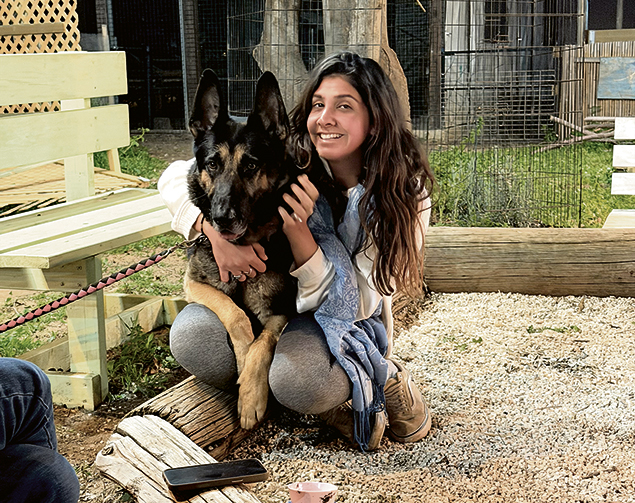
“The first one is probably Fraidy Reiss, a young woman who was part of a badly arranged marriage,” she said. Ms. Reiss, a charedi Jew from Brooklyn, had a hard childhood — she had no real social status in the community — so although marriage was necessary for a woman to have any standing, a good marriage was out of the question. So she married badly, to a man who abused her. But the New Jersey-based Ms. Reiss is a woman of extraordinary strength and conviction. She left the marriage and was able to take her children with her. She got herself an education — at Rutgers, because she is deeply local — and she started an organization to fight child marriage.
That’s where the Good People Fund came in. It helped fund Ms. Reiss’s organization, Unchained at Last. “Through our work with Fraidy, we were able to become involved with individual cases,” Ms. Eisenberger said. “We were able not only to help her, but to help her clients, through her.” That means that her fund has been able to help desperate women escape from unsafe situations not only locally but around the world. “Part of our work with Unchained was that we were able to get involved with individual cases, about young women who were kidnapped and they had escaped,” Ms. Eisenberger said. “The stories read like novels.”
Back in this country, Unchained at Last has been successful in convincing states to update their laws. “Today, 15 states have outlawed child marriage,” Ms. Eisenberg said.
“This was our first project that actually changed the culture.”
There are charities that take on huge challenges, like ending hunger or curing cancer. Those are important undertakings. But their size makes them nebulous. Some people like tackling those kinds of challenges. Others like the kind of problems that are smaller scale and therefore easier to help fix.
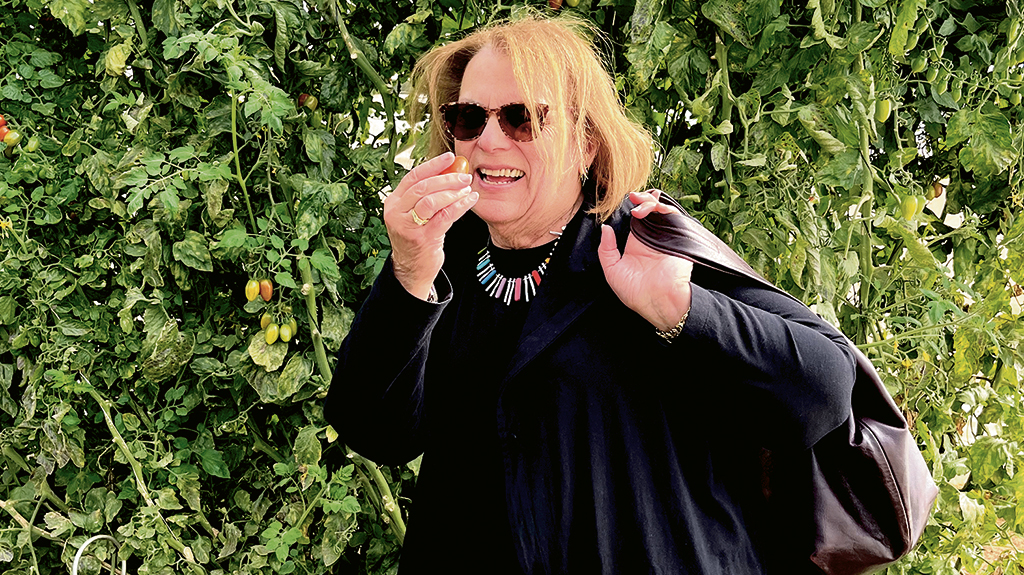
“Look at Gary Oppenheimer,” Ms. Eisenberg said. “He lives in northern New Jersey, in Sussex County, and started AmpleHarvest.org. He’s a master gardener, retired young from tech and finance. Every August his garden would be bursting. He’d bring herbs, baskets of tomatoes and zucchini, and give them away, eventually people would hold up their hands and say ‘No more!’” (There is a limit to the number of zucchini any one person can eat.)
“So he thought about food pantries. He thought that they could use this produce. He used his tech background to create an app that connected home gardeners to local food pantries. He surveyed food pantries in the United States, he learned a lot, and he got connected with the USDA.
“So he took something very personal to him, and now it is a national nonprofit.”
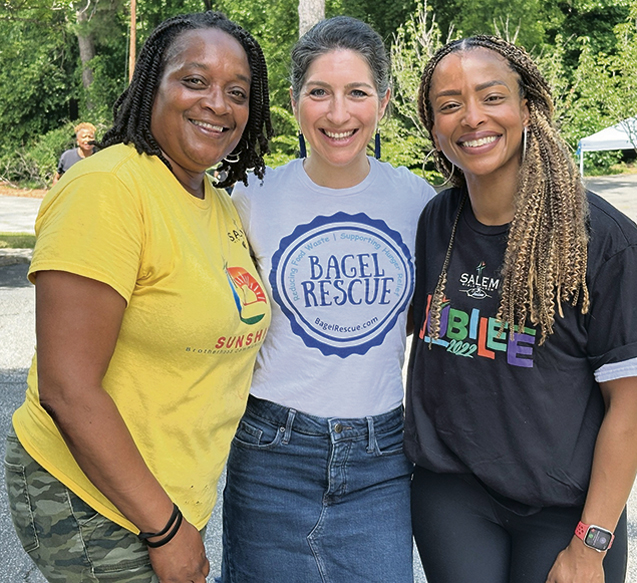
The project is highly specific, even quirky, although the need it addresses, in its admittedly small way, is massive. It is that combination — a local approach to a global problem, with no aspirations to fixing the whole problem but a serious and creative resolve to fix its own little corner of it. It did not need a huge grant. But it did benefit greatly from the advice and mentorship of the Good People Fund.
“We are small, but we are very mighty,” Ms. Eisenberger said. “Nobody else is funding these people. Some of them just came up with an idea. We are not saying give me three years of records and we’ll decide. We are betting on them, and giving them a first bit of visibility.
“We say that our goal is to make you more visible to other funds. That is what we have succeeded in doing. Take Fraidy. She is nationally known now.
“Or more recently, take Dr. Mark Fenig. He is an emergency room physician at Memorial Sloan Kettering in New York. Mark understands that people who are incarcerated have terrible medical care, so he created the Medical Justice Alliance. That’s an organization that gathers volunteer lawyers and volunteer physicians who work on behalf of prisoners. Some have cancer and can’t get treated properly in the penal system. There have been prisoners who were months from dying and got released because of his work.
“The situation is a national disgrace, and now his work is exploding all over the place. It’s amazing. Who would have thought of it?
“We have an incredible program called Everyday Boston. Cara Solomon was a journalist; she’s a wonderful storyteller who realized that in Boston, like in any city, there are barriers between people. Do people in Newton” — many of whom are Jews — “know people in Dorchester” — a mainly Black neighborhood. “She gets people to tell their stories. They break down barriers. They bring groups together. There is a huge activity on Valentine’s Day, with thousands and thousands of Valentine’s Day cards. And there is a program working with people who were formerly incarcerated, welcoming them back into the community.
“Cara is a wonderful, sweet, kind woman who has given her life to this — to telling stories and breaking down barriers.”
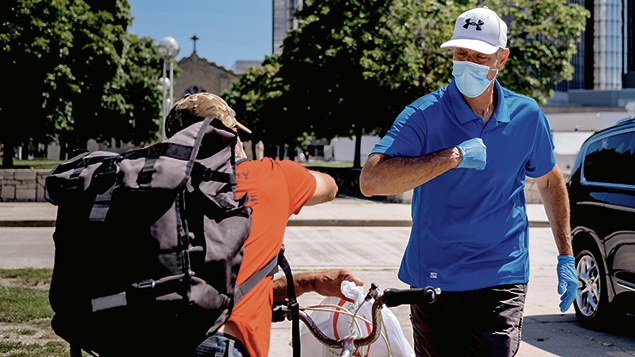
The Good People Fund has worked with Oded Grinstein of Fair Lawn. When his family lived in their native Israel, his infant daughter was diagnosed with a rare form of cancer. She survived, and the experience changed her father’s life. “He dedicated his life to helping families like his find the medical care they need,” Ms. Eisenberger said; “MyChildsCancer.org has helped save children’s lives and preserve their parents’ sanity and ability to function in the world.”
In Israel, the Good People Fund supports such organizations as Tamar’s Way — Darchei Tamar — created by Iris and David Herman of Afula, who lost their daughter to leukemia and have dedicated their lives to helping other parents navigate the terrifying maze they enter when their children are diagnosed with life-threatening illnesses.
Sometimes organizations grow too big for the Good People’s Fund. That is an outcome that Ms. Eisenberger loves (although she does not think that such growth is necessary, or even desirable. for all the groups she supports).
The organization called Civic Spirit, which works toward producing a more civil society, not with bland generalities but with specific programs, “is becoming a graduate,” Ms. Eisenberger said. “They are getting big. We started supporting them several months ago. I said to them, ‘You will be gone soon. You are on that trajectory. But your message has to get out.” (Civic Spirit is a secular organization, but its creators and leaders are specifically, proudly Jewish, guided by Jewish values. Its co-founder, Robert Hirt, is a rabbi, and so is its executive director, Charlie Savenor.)
Ms. Eisenberger was celebrated for her life’s work and her creation and maintenance of the Good People’s Fund in specific last week, and now she’s preparing to step down. Not all the way, of course — “I will be working for a couple of days mentoring the grantees, and I will be developing an alumni program,” she said. And also, “I might be able to read a book or two.
“I realized several weeks ago that because I have been doing this for so long, I have been carrying the weight of a lot of people on my shoulders,” Ms. Eisenberger said. “It is so personal, and I am so personal with it.
“My Hebrew name is Nechama.” That means comfort; often it refers to the source of that comfort. The comfort-giver. Someone said that her parents must have been prescient, “How did they know?” the friend asked. “But I laugh and said that it’ll be good not to be so immersed. I obviously never will turn my back. I’m not a pickleball player. But I’m looking forward to not feeling that I have to check my email every 10 minutes. That I can go out to lunch with a friend, or go to the dentist and not have to rush back.
“It’s a beautiful day outside. I hope that I can just go sit outside. That I can go to the beach in June without feeling guilty.”
But, she said, the chance to do what she’s done “has been a privilege.” Good people get to fund other good people.
Learn more at goodpeoplefund.org