Good People Fund grantee Lemonade Fund, founded by Shari Mendes, marked its 15th anniversary this year with Shari’s annual letter, which she writes each year before Tisha B’Av, the date in 2010 she was diagnosed with breast cancer. The following year, she founded the Lemonade Fund, Israel’s first and only women’s cancer relief fund. For fifteen years, the Fund has eased the financial burden on vulnerable Israeli breast and gynecological cancer patients so they can focus on healing. As Shari writes, “If we work together, we can build anything, even from ashes.” We are proud to have stood with her during this journey.
Good News Update
1000+ Women Sharing Their Language
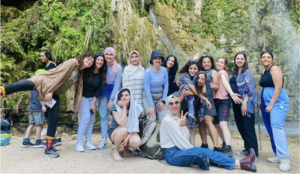
Good People Fund grantee Speaking Jerusalem, led by Suzan Sayyed and Lior Urian, sent out their Summer 2026 community update this week, full of great photos and stories about building bridges across Jerusalem through shared language. The update shared some remarkable numbers, with over a thousand women reached through dozens of language gatherings so far this year, and told the story of Layan, a Jerusalem community activist in her 50s who was connected through Speaking Jerusalem’s employment project to a meaningful new municipal role in East Jerusalem, work that has since expanded into new partnerships across the city.
Zumwalt Acres Shares Regenerative Agriculture Practices
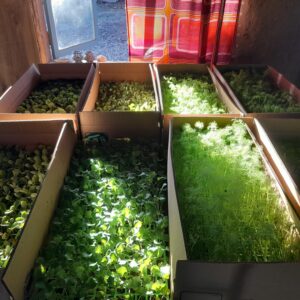
Good People Fund grantee Zumwalt Acres, co-founded by twins Gavi and Remi Welbel, welcomed the local Sheldon, Illinois community this summer for a presentation led by their apprentices, including Gavi herself, on the regenerative agriculture practices bringing new life to the farm’s soil, from biochar production to mushroom cultivation. We are proud to support Gavi and Remi’s vision of turning their family’s Illinois farmland into a shared hub for climate research and Jewish values-driven land stewardship.
Renewal at Kaima Hukuk
Good People Fund grantee in Israel Kaima Hukuk, led by Asaf Zaiden, has stepped back into full bloom after a long and difficult stretch. The farm in Israel’s lower Galilee, which gives at-risk teenagers purpose and community through agricultural work, saw its youth barred from the farm during the war. Now 22 teenagers are back in the fields, an all-time high, and the farm is thriving. Alongside this renewal, Kaima Hukuk is launching several new initiatives to support bullied youth and teach kibbutz communities to grow their own food.
TribeTalk Brings Antisemitism Education to Summer Camps
Good People Fund grantee TribeTalk, founded by Michelle Black, Robin Friedman and Jude Sydney, spent this summer bringing its Standing Strong antisemitism education program directly to Jewish camps, including Camp Coleman in Cleveland, Georgia and Camp Bauercrest in Amesbury, Massachusetts. Through age-appropriate, interactive workshops, TribeTalk creates space for campers to ask questions, share experiences, and learn practical ways to recognize and respond to antisemitism with confidence and pride rather than fear. As Camp Coleman shared, campers “left the program knowing they are not alone,” with “a strong Jewish community behind them, trusted adults to turn to, and practical tools.” One Bauercrest camper summed it up simply: “I liked how this made me more comfortable to show I’m Jewish.” We are proud to support their work equipping the next generation of Jewish leaders with the resilience and confidence to stand tall.
404,507 Kilograms of Produce, Thousands of Lessons in Giving
Good People Fund grantee Pesia’s Kitchen (EAT), Founded by Gideon Ben Ami and led by Yoni Ben Ami, shared their annual report for the EAT School Program, and the numbers are impressive: 31 schools and 18,365 students took part this year, rescuing and distributing 404,507 kg of surplus produce — the equivalent of 809,014 meals — while avoiding an estimated 768.5 metric tons of carbon emissions along the way. Every single one of the 31 participating schools said they would recommend the program to others, and 29 gave it a perfect 5 out of 5 satisfaction score. Schools across Jewish, Arab, Bedouin, and Druze communities describe students who take on responsibility far beyond what’s asked, from a 12th grader who has delivered vegetables to a homebound neighbor for three years, to students who show up on days they aren’t scheduled because they don’t want to miss the sorting and distribution. As one school in Afula put it, “The program has become an inseparable part of the school’s DNA.” We are proud to support this work.