Bringing extensive Israel experience, Julie Fisher readies to take helm of the Good People Fund
December 15, 2025 – Nira Dayanim, eJP
Fisher will succeed her mentor, Naomi Eisenberger, who launched the foundation 17 years ago
In 2008, Naomi Eisenberger founded the Good People Fund, a grantmaking organization that provides financial support and mentorship to small and mid-sized nonprofits led by changemakers — referred to as “Good People.”
Before launching the Good People Fund, Eisenberger, a nonprofit leader and business professional with a background in education, served as managing director of the Ziv Tzedakah Fund. Like GPF, Ziv Tzedakah supported grassroots charitable projects, primarily in Israel. Eisenberger was a mentee of Ziv’s founder, Danny Siegel, and spent more than a decade at the fund until Siegel closed it, citing its growth as an obstacle to maintaining the lean, hands-on model that had defined its early years.
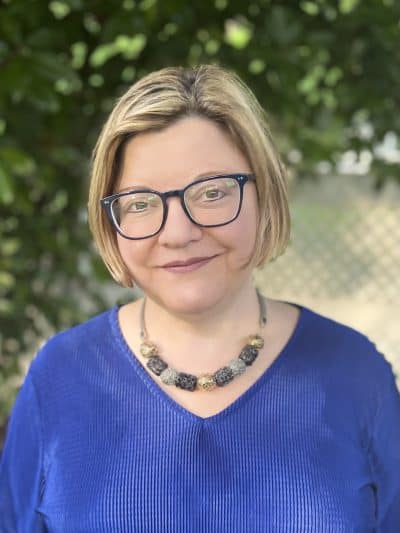
Eighteen years after founding the Good People Fund, Eisenberger is passing the torch to Julie Fisher, a nonprofit leader in her own right. Fisher founded the Consortium for Israel and the Asylum Seekers, which advocates for African asylum seekers in Israel, and served six years on the board of trustees of the Walworth Barbour American International School in Israel.
Fisher is also a longtime mentee of Eisenberger’s. The two met at a Good People Fund event in Israel eight years ago, while Fisher’s spouse, Daniel Shapiro, was serving as U.S. ambassador to Israel. After returning to the United States, Fisher became GPF’s first director of engagement in 2023. Earlier this year, she was named associate executive director, and in July, she will assume the role of executive director, while Eisenberger transitions to executive director emeritus and “master mentor.”
Earlier this month, Fisher spoke to eJewishPhilanthropy about the leadership transition, how to identify “good people” and the challenges both Israeli and American grantees have faced of late.
The interview has been lightly edited for clarity.
Nira Dayanim: Come July, you’ll be the executive director of the Good People Fund. What have the last few months looked like since that transition was announced, and what’s on the horizon as you step into the role?
Julie Fisher: I have been involved with the fund and a fan and mentee of Naomi Eisenberger for the past eight years. So although this news may feel new and exciting, it’s actually the culmination of a path that we’ve been on together for eight wonderful years, starting with the night I met Naomi in Tel Aviv at the 10th anniversary of the Good People Fund. Before coming on board officially, I’ve been a supporter of their work and been following along in the journey all of this time. It feels really wonderful to be taking this next step.
We are on a journey of transition that is built on trust and friendship and respect, working with our board, working directly with Naomi and little by little, taking over more responsibilities of running the organization. Naomi in July, will move into her encore role, where she will be working with alumni grantees, and she will be doing outreach for us, and she will be sharing her wisdom and expertise of all of these years with us. We feel very lucky that she’s agreed to stay on and to have a role in the future.
Last year, Naomi and I and the board together, went through a strategic planning process where we looked at: How has the Good People Fund been able to impact for the last 18 years, and what do we need to do to sustain that good for the next 18 years? And through that process, we have a very clear path forward of strategic priorities that includes strengthening our program and ensuring financial sustainability, refreshing our governance and infrastructure, and one of our goals was leading a thoughtful transition.
ND: Can you tell me more about how you met Naomi?
JF: I was in Israel because my husband, Dan, was the ambassador from the United States to Israel, and I left my job in education to go with him and help serve our country. And while I was there, I wasn’t able to work in the embassy or around the local economy, and I began to look for ways to be involved and make a difference outside of my roles and responsibilities within the embassy as the spouse of the US ambassador and, of course, as a mom of three young children.
I became immersed in supporting the African asylum-seeking and refugee community in South Tel Aviv for almost the entire time that I lived in Israel, which ended up being 12 years…Eight years ago, I had been volunteering with a dear friend, Gideon Ben Ami, who is the founder of Pesia’s Kitchen, an organization in Tel Aviv that provides food to those who are hungry, and one day he said to me, “Come and meet my friend Naomi and give a little speech at the 10th anniversary of the Good People Fund.” I had no idea what the Good People Fund was, and I had no idea who his friend Naomi was, but I wanted to honor his request. So I took Dan with me, we went to the restaurant, and I gave my little speech about the incredible innovation that I saw in the social services sector. I always say people always think about “Startup Nation” in the technology area but what I saw was innovation and people looking around and seeing inequities and standing up and finding creative ways to offer dignity and hope and healing. Then we met Naomi. We have a photo of the very first minute that we ever met, which is neat, especially now. I didn’t realize at the time that that evening, eight years ago, was going to change the path of my life in a fundamental way.
The Good People Fund grantees from Israel stood up one by one, telling their absolutely beautiful stories… the incredible creativity and innovation of the responses to vulnerability and need was astounding, and I was hooked; that was it. I left thinking, “I’m going to follow the Good People Fund and do whatever I can to help.” Naomi became my mentor and friend, and that has led us to this transition that’s happening today, or I am inheriting the organization that she created, which is such an honor and a privilege.
ND: Working with those at the early stages of their projects, how do you discern between a beautiful story and an opportunity for making marked change? To what extent is that a gut decision versus a formal process?
JF: I would say it’s a combination between gut and logic and really good vetting. I mean, we like to joke that Naomi Eisenberger, our founder, has been doing this for a long time, and her gut is incredible. She knows. And if you look at our numbers, we now have over 260 alumni grantees. So we see our impact, and we see that our numbers are much, much higher than the normal rate of organizations that make it. With our support, we find that our social visionaries are more likely to make it through the beginning years of starting their organizations. We have a system of careful vetting our grantees. We often find them on our own. Every once in a while, some find us, but we really pride ourselves on finding our grantees through careful research, through asking our extended network of trusted folks in the field, in the U.S. and in Israel, who know what we’re looking for and that we are different from other funders, and will often send us kind of the gems that they discover in our in our area of beginning stage, social visionaries. Your question is a really good one. How do you know? We meet with each social visionary, individually, we spend a lot of time hearing about their story, not just measuring the passion that they feel, but also talking about what, what is their plan, and how do they intend to impact and to make a difference, and where, where’s their motivation coming from? What kind of resources do they have available? How can we help them? We most often find social visionaries who have already registered as a 501c3 or in Israel, they have their 46 alef but sometimes we find someone with a brilliant, creative idea to repair or heal or give dignity where it’s most needed and we will help them become an organization. We will provide a pro bono lawyer to help them with their paperwork, and we will invest in them from Day 1. We have several alums where we gave them their first check in the U.S., and several in Israel, where we were their first supporter outside of Israel, and we helped bring them visibility. And now they’re kind of superstars in the field, and we pride ourselves on that.
ND: Does having that relationship with early-stage changemakers put you in touch with emerging needs that are not yet on the philanthropic radar? If so, what are some of those trends?
JF: Working with social visionaries at the beginning of their journeys has always been a place in the sort of philanthropic ecosystem that is rife with challenges. People always have the passion for their mission and for wanting to make change and to repair, and often struggle to find the funding and to find the support, especially when they don’t yet have any impact reporting, because they are new. So we are in that space, in the philanthropic ecosystem, and there aren’t a lot of us in that space. We take a calculated bet on the social visionaries who are at the beginning of their journey. There are unique challenges now, and there are always challenges for the brave folks who are in this space, the beginning space. We have seen a plethora of inquiries, and of support larger than ever, this year, even larger than last year. Of organizations that are our targets, and that there are more of them than usual.
A lot of our grantees, because they’re so small, they’re not as well known, they did not receive a lot of the emergency money that was raised by the primarily American Jewish community post Oct. 7. So the billions of dollars that were funneling in didn’t trickle down to many of our grantees, and in fact, some of our grantees who are not in the space of addressing trauma, in particular, found that they lost some of their funding. At the same time, every single grantee of ours in Israel felt the impact of what the country lived through. So even if it was not necessarily directly related to trauma or the war, every organization was impacted negatively. For example, our organizations that support youth at risk and more people who needed support because of displacement, because of harm to families. So the challenges are significant.
Our founder, Naomi Eisenberger, likes to say, our good people are the canaries in the coal mine, and we can see trends as they’re coming. I believe that this is true…some of our young social visionaries who are just beginning to do work in this area, because of the war, were not able to continue and needed to move into more conventional types of employment and not move forward in the social sector, because of things such as spouses who were who were sent off to reserve duty, for weeks and months at a time. So the ability for young social visionaries in Israel to have the space to innovate and be dedicated to this work, there’s a real question of how that was possible in the last two years and when that will sort of be possible again.
ND: You started doing this work after moving to Israel, and have continued it after moving back to the United States. Can you compare those two experiences?
JF: It’s been really interesting to have had the experience of being immersed in the philanthropic and humanitarian world in Israel for 12 years, and then to come back here and to work in an area that was newer to me on this side of the ocean. To have this incredible opportunity to use my passion for this work and to stay here in the U.S. and in Israel, and to be able to continue those strong relationships that I had developed when I was there for 12 years, and to also do some of the work of bridge building between the American Jewish community and and the Israeli community, which I did from that side. This work allows me to continue that journey. One of the things that has been the most surprising is the connections between our grantees in Israel and in the US. Our grantees are diverse and interesting and come from every background. We are a Jewish organization. We are motivated by our Jewish values, especially of tikkun olam, repairing the world. And in our portfolio of grantees, we have grantees from every religion and every background, and we pride ourselves on that. Last year, we brought everyone together in New York City for our conference for the first time, and we were stunned to see the collaborations that started between grantees doing vastly different work, coming from vastly different backgrounds. That was a delightful surprise. We knew that everyone would get along and they would learn, and we were stunned with the kind of collaboration and cooperation that we have seen since that time with vastly different grantees that’s been absolutely a pleasure to watch and to support.
ND: What did conversations between the Israeli and American grantees look like at the conference? Did you address Oct. 7 and its aftermath, or try to avoid that topic?
JF: We focus on good people doing good things to help others. And what’s amazing is in our beautiful and simple mission of supporting social visionaries as they put more good into the world, we have managed to really stay focused on that. I think that’s part of the beauty of what we do, and I don’t want to jinx ourselves, but we’ve managed to really stay in a very calm and peaceful place with our focus on supporting the good work being done in both countries by actual people who’ve met each other. At our conference in New York City, it was really not about politics or not about the war. It was our focus is wholly on good people, addressing societal challenges and bringing more healing, bringing more dignity in every way.
ND: Was that by design, or did those topics naturally not come up?
JF: The conference was designed to support our social visionaries. The work that our social visionaries do, our good people, as we call them, is draining and difficult. Many of them are isolated, and having these two and a half days together that we had last year in New York was like a breath of fresh air. For our Israeli grantees, it was the first time that many of them had left Israel in a year since Oct. 7, so to have a good night’s sleep without being awoken by sirens was a gift. The conference was really focused on meeting the needs of our grantees, one of those needs was for our Israeli grantees to have a break and to have time to breathe and to be with their peers. And it wasn’t by design, because actually, the conference was scheduled to have occurred the year before, and it was canceled because of Oct 7. It was postponed for a whole year. So it was designed to bring everyone together and to learn and to meet each other for the first time, and that was the goal of the conference. It far exceeded our expectations, because we found that our grantees wanted to connect more. Whether it was someone in food security in Jerusalem or someone addressing food insecurity in Atlanta, Georgia, they obviously had lots to talk about. But the surprising part was people of different religions, faith backgrounds or lived experiences, working on different issues. So someone was working to support families of children with cancer, and someone else was working on a completely different societal challenge, and because they were both social visionaries who started their own organization and where they were struggling with some of the same things, of fundraising or setting up an organization building sustainability. So the kinds of connections that were fostered were too numerous to count.
ND: Do you see similarities in the needs of grassroots changemakers in Israel and the United States?
JF: A similarity that stands out tremendously is the exhaustion that social visionaries are feeling. They’re kind of being hit from all sides. There’s the ongoing humanitarian needs that our good people are trying to address day to day, responding to illness, responding to hunger, responding to societal inequities, and then there are the challenges of the policy implications of what they do and the rollbacks of some of the rights that they fought for. And then there’s the fear. A lot of our social visionaries in both countries are seeing a huge uptick, in need from their beneficiaries, and that impacts them both, on the day to day, as well as when thinking about how to get the resources that they need to continue to fuel their mission and do their good work. So for example, our organizations that support refugees in the United States, of which we have three organizations that support new Americans, they are being hard hit by both an uptick in need and push back in terms of losing some funding, in terms of people being fearful to even come out to their events or come out to get the support that they desperately need.