• Skip to primary navigation
  • Skip to main content
  • Skip to primary sidebar
  • Skip to footer
 
LOG-IN
DONATE NOW
SUBSCRIBE
The Good People Fund

The Good People Fund

  • About
    • Mission and Vision
    • Values
    • Plan for Good (Our Strategic Plan)
    • Our Story
    • Professional Leadership
    • Board of Trustees
    • Financial Information
    • Privacy Policy
    • FAQ’s
    • Contact Us
  • Our Grantees
    • New Grantees
    • By Program Focus
    • By Location
    • By Organization
    • Alumni Grantees
  • How to Help
    • Donate Now
    • October 7 and After
    • Acknowledgement Cards
    • Planned Giving
    • Charitable Solicitation Disclosure Statement
  • Learning
    • Good People Learn
    • Our Educational Philosophy
    • For Jewish Educators
      • Our Good Service Model
      • Grab ‘n’ Go Lessons
      • GPF Core Curriculum
      • B’nai Mitzvah Service Projects
      • Archival Materials
      • Ziv Tzedakah Curriculum
    • For Students
      • Tips for Good Service Projects
      • Other Resources
  • Media
    • Newsroom
      • Grantees in the News
      • GPF in the News
      • Press Releases
      • 10th Anniversary
    • Grantee Focus
    • Videos
  • Good News
    • Good News Stories
    • Executive Director Messages
  • Podcasts
  • Journal of Good
    • Journal of Good
    • Stories of Hope
    • Journal of Good – Prior Years
You are here: Home / Archives for Grantees in the News

Grantees in the News

N.Y.C. Eatery Caters to Huddled Masses Yearning to … Cook!

NEW YORK – The opening of a new restaurant here is hardly a headline-making event, but the launch of Emma’s Torch earlier this month had an unusual flavor. That’s because the kitchen staff at this Brooklyn eatery are refugees, asylum seekers and human-trafficking survivors who are training to work in the American food industry.

Creating a community around food is at the heart of Emma’s Torch. The restaurant, which was initially a pop-up kitchen, teaches professional cooking skills to those who have fled persecution, and then helps them find a job. No prior experience is necessary and the students are all authorized to work.

Founder Kerry Brodie, 27, was working as a communications director in the Israeli Embassy in Washington, and later at the Human Rights Campaign, when she realized she wanted to do something to benefit society. “I felt that by working in public policy – though it was really rewarding – I wasn’t really working with people,” she tells Haaretz.

After volunteering in a homeless-shelter kitchen, she realized that fond memories of cooking with her family weren’t that different from those around her. So she thought, why can’t we use that kind of universal movement experience to create long and lasting change?

Brodie quit her job, entered culinary school and opened a tiny pop-up kitchen in Brooklyn, with two refugee students at a time, learning the basics of the American brunch. But as the demand from both customers and applicants grew, Brodie and her team realized they needed to expand to a permanent space and expose the students to additional types of meals.

Now, eight participants are trained at any given moment and the program aims to graduate 50 to 70 trainees by the end of 2019. During the two-month paid internship, the students learn the secrets of working in a professional kitchen – from how to medium dice a potato to what the main mother sauces are.

Among the organizations that partner with and underwrite Emma’s Torch are the veteran HIAS refugee organization, the International Rescue Committee, Sanctuary for Families and various church-based groups.

But the Emma’s Torch program doesn’t stop there. It also joins forces with local chefs and kitchen managers to integrate the graduates into the New York restaurant scene and helps them find work.


Passionate about diversity

Naseema Bakhshi is a recent graduate who now works at Chelsea Market’s Dizengoff restaurant – one of a number of eateries opened by Israeli-born chef Michael Solomonov – preparing hummus and Israeli salads. A refugee from Afghanistan, she arrived in the United States in 2017 with her six children, and says her co-trainees and new colleagues have become her new extended family.

Naseema Bakhshi, an Afghani refugee and graduate from the Emma’s Torch program, working at the Dizengoff kitchen in Chelsea Market, New York. Shachar Peled

Her face framed in a colorful hijab, the 42-year-old Afghani is a true hugger, warmly embracing everyone she meets. She says she is grateful for the second chance she got in life.

“I lived in Afghanistan and then Pakistan, where I wasn’t happy. It wasn’t safe, my children couldn’t go to school,” she says while warming chickpeas in a large pot in the Dizengoff kitchen. “I come to New York, I have a job, a home, every person is my friend. I have insurance and Medicaid. I came with nothing, but now I have everything.”

Bakhshi’s new “family members” are truly international. Indeed, applicants come from countries ranging from Syria to Guinea to Venezuela. It is only natural, then, that those leading the Emma’s Torch program find themselves at times on the pupils’ bench.

“We learnt our shakshuka from our students,” Brodie chuckles, referring to the Israeli egg-and-tomato dish. “Naseema taught me about dissolving saffron using ice and how to make chutney kebab.”

Dima Pasiakin, 31, is midway through his training. He fled Russia last year with his husband Michael, after they were prosecuted under the country’s anti-gay legislation, and applied for asylum in the United States. Inspiringly cheerful, he did not let his circumstances halt his aspirations to someday become a chef with his own restaurant. After studying to improve his English, he joined Emma’s Torch.

“The most important part is that we are working there, actually making the food for people,” he says. “In our very first day there we discussed our country’s cuisines, our favorites, and from time to time we cook something that we like, something to share with the others.”

Diversity at Emma’s Torch isn’t just about the places where people come from, but also what they’re passionate about. “For me, it was humbling to realize that actually every student has different tastes and experiences,” Brodie recounts. She adds that she learned her Saudi student actually prefers to prepare Italian dishes and the Syrian refugee’s favorite cuisine is Korean.

Together with Alex Harris, the chef/culinary director, the team has developed a menu that takes into account the basic skills students must acquire to succeed, what’s seasonal and delicious, and what flavor profiles will spark a sense of familiarity that will make them feel at home in a professional setting – and also be appealing to the customer’s palate.

A window into the kitchen of Emma’s Torch, the Brooklyn eatery that trains refugees to work in the food industry. Giada Randaccio Skouras Sweeny

‘Nice Jewish lady with chutzpah’

The “New-American” menu on offer at the restaurant embodies a blend of cultures and includes items as simple as avocado toast and as unique as black-eyed pea hummus. Another popular dish is the pistachio bread pudding, a baklava-inspired dessert (see recipe below).

The idea of kitchen training as a social vehicle for change has been around for a while. Liliyot restaurant in Tel Aviv, where members of staff include at-risk youth, and the socially engaged Sunflower Bakery in Gaithersburg, Maryland, were among Brodie’s inspirations – both of them initiatives that help people help themselves and strengthen the community through food.

“I don’t think of this as a charity, it actually benefits me,” Brodie smiles. “I get to eat delicious food and live in a city that has amazing diverse cuisine – and that’s because we welcome the stranger.”

Brodie considers herself a proud American Jew and Zionist who was raised to fight for a just society. “I think what has strengthened us as a country historically has always been fighting and advocating for refugees,” she says.

Black-eyed pea hummus, which is part of the “New American” menu at Emma’s Torch. Giada Randaccio Skouras Sweeny

It’s no surprise that Brodie named her initiative after Emma Lazarus, the poet whose 1883 sonnet “The New Colossus” is engraved on the Statue of Liberty – or, as Brodie calls her, “a nice Jewish lady with chutzpah.”

The Emma’s Torch team sees its work as a way of securing Lazarus’ legacy. “What makes us a great and a strong nation is welcoming people,” says Brodie, herself a child of South African immigrants and great-granddaughter of Lithuanian refugees.

“This is an important reminder that people share a common humanity,” she concludes. “My memories of cooking with my mother aren’t that different from the memories of the student from Saudi Arabia cooking with her mother. And if people can remember that, then I hope they can remember we should be building bridges and not walls.”

Brooklyn’s Newest Seasonal American Restaurant Is Run by Refugees

The newest restaurant in Brooklyn has a mission beyond serving seasonal fare — it doubles as a training program for refugees.

Emma’s Torch, formerly a pop-up, opens this week in the former Wilma Jean space in Carroll Gardens, at 345 Smith St. near Carroll Street, offering a menu with dishes like herb-roasted chicken with harissa and grilled branzino with pepper stew.

But founder Kerry Brodie’s idea started long before this opening. She founded Emma’s Torch as a pop-up after volunteering at a homeless shelter, where her favorite part of the day was serving breakfast. “The women in the shelter would talk about cooking and the food from home,” she says. “I became intrigued by the idea of using food to do more than just feed people. Maybe we could use food to nourish and empower them.”

She eventually quit her communications job at the Human Rights Campaign and went to culinary school, graduating in May 2017. One month later, Brodie opened a pop-up cafe in Red Hook, with chef Alexander Harris (Union Square Hospitality Group, The Pierre Hotel) as culinary director.

They devised a professional development program for refugees, asylees and survivors of human trafficking: a two-month paid apprenticeship providing culinary training, English lessons, and upon graduation, a job in the restaurant industry. Partner organizations like refugee resettlement services and advocacy groups refer people to the program, and then Emma’s Torch connects its students to a network of NYC restaurants for jobs.

It worked. Over six months, they trained eight students, who are now working the line in kitchens across the city including at the Dutch, Little Park, and Chelsea Market’s Dizengoff.

But perhaps even more importantly, people seemed to like the food that the cafe was putting out, she says. “About 70 percent of the guests didn’t know what Emma’s Torch was; they were walking in because they read a great Yelp review and wanted to have a really nice brunch,” says Brodie. They decided to expand to a larger, permanent space in Carroll Gardens and add dinner service. On May 16, the new Emma’s Torch opens on Smith Street in a glass-walled corner space.

The bright, cheerful interiors were done by Rachael Ray’s home designer Michael Murray, who also supplied the furnishings. Names of partner organizations and donors are engraved on wooden spoons hanging from the walls, alongside a collage of vintage labels from Roland Foods, which supplies much of the product being prepared in the open kitchen.

The cuisine is seasonal American and designed to familiarize the students with the flavors and ingredients of their adopted home. Still, there are nods to some of their places of origin in the form of shawarma spice on the lamb shank or a sticky tamarind glaze on the barbecue wings. And then there’s the signature black eyed pea hummus, which infuses a classic American ingredient into a Middle Eastern recipe. Take a look at a full menu below.

It’s an apt metaphor for students like Mazen Khoury, who moved here from Syria five years ago and is currently halfway through the two-month training program. Although Khoury owned a restaurant in Syria, he could only find jobs at Arabic and Turkish restaurants in Brooklyn despite a goal of working in fine dining. It was only after his sister heard about the Emma’s Torch program and applied on his behalf for his birthday that he started receiving formal culinary training.

The first lesson he learned at Emma’s Torch? Punctuality. “The first two days I didn’t come on time and they sent me home. Now I try to show up half an hour early,” he says.

Front-of-house staff here are regular paid staff, separate from the culinary training program. But even there, where possible, the restaurant hires people from disenfranchised communities, such as refugees or from the Exodus Project, a program that assists young people affected by the justice/correctional system.

But the kitchen staff is nearly all students in the two-month culinary program, with the exception of chef Harris. When Khoury graduates, he wants to work in a fine dining French or Italian restaurant, and since Emma’s Torch works with partners like Andrew Carmellini’s Noho Hospitality Group, that goal is very much within his reach. For now, he’ll concentrate on perfecting the beer-braised brisket and blueberry buttermilk pancakes at Emma’s Torch.

How One Traveler Is Bringing Literacy To Timbuktu & The Southern Sahara

Sometimes, a life-changing adventure doesn’t begin with careful planning, but with the simple flip of a coin — literally. At least, that’s how it went for intrepid traveler Barry Hoffner. And while Hoffner has immersed himself in many far flung places, the one that truly stole his heart was Timbuktu, located in the in the West African country of Mali.

It’s here that Hoffner got the inspiration for his nonprofit, Caravan to Class, which works to bring education and literacy to the villages around Timbuktu and the Southern Sahara by engaging diverse communities of supporters.

I caught up with Hoffner to learn more about his inspiring travel story.

1. What inspired you to want to travel, and what made you choose Timbuktu?

When I was graduating high school in 1978, my best friend and I flipped a coin to see if we would spend our savings from work on traveling/backpacking through Europe (his choice) or surfing in Hawaii (my choice). He won the coin flip and that changed my life. Since then I have lived/worked in nine different countries and have traveled to over 100 different countries.

In college I read a book about the Sahara Desert and was fascinated by the idea and mystery of Timbuktu. Visiting Timbuktu became a high priority on my bucket list and I was able to realize my dream to travel there in 2010.

2. You had encounters in Timbuktu that had a huge impact on you. What was that? How did you turn that experience into a positive one?

I traveled to Timbuktu in 2010 purely for the sense of adventure; however, while there for the famous music festival, the Festival Au Desert (which was last held in 2011 due to the insecurity in the region), I visited a village and saw that they had no school. Meeting with the head of the village and his wife in their tent, I was impressed with how sincere they were about the need to educate their children and how engaging and open they were, particularly the deference the chief showed to his wife.

It was at that moment that I told myself that I would raise the money to build that village, Tedeini, a school to celebrate my 50th birthday. That was the birth of Caravan to Class.

We have had some challenging times doing our work in Timbuktu. Only days after I visited Timbuktu to see our second school built in 2012, the entire region was taken over by a group linked to Al Qaida and our schools were shut down. Thanks to the French military the area was liberated in early 2013 and we were able to resume our work shortly thereafter.

3. For those looking to make a positive impact on the places they visit, what advice would you give?

In much of the developing world, particularly in Africa, it is the villages where a traveler will really see the soul of a country. Africa is a continent of villages, not cities. I would advise travelers to make a concerted effort to try and visit a village or two. Bring practical things like pencils, paper, old backpacks and find a way to visit a local school and hand them out directly to the students. In many cases, mid to larger size NGO can arrange visits to schools and hospitals. Find a place that inspires you, a cause that is important to you. Do your research to find the organization that best addresses the challenges/injustices faced by that place and get involved, through becoming a donor and/or volunteer.

4. For those looking to volunteer or work abroad to help the local population, what tips would you give for choosing a responsible placement where they can make the greatest impact?

There are many great non-profits that can arrange volunteering and working abroad on their programs. Unfortunately, smaller organizations like Caravan to Class simply do not have the infrastructure, particularly given the security situation, to provide these opportunities. Do your homework, find a non-profit that resonates with you, ask the hard questions and take a chance and go. You will not regret it.

5. For those looking to start their own nonprofit/charitable organization, what advice would you give?

First, find a place, cause and culture that truly inspires you. Think through critically whether you can create an organization that can begin to solve some of their problems. If you truly believe that you can, I would then offer the following advice:

  • Get friends or colleagues to be inspired by the same place, cause and work together as a group.
  • Find a local NGO whom you can trust. Do your due diligence. Start small to ensure that the planned work is happening on time and within budget.

These days, it is not difficult to start a 501c3 in the US. Focus on three important areas equally:

  • Programming (the programs you will offer and the impact they will have)
  • Fundraising (there are many different ways to raise funds, small online campaigns, writing grants, focus on a core group of major donors)
  • Administration (do what you do in a well organized way)

    6. What have been some of the most important lessons you’ve learned, both from traveling and starting Caravan to Class?

    The biggest thing I have learned is the need to have more depth than breadth. It can be challenging running an organization whose work is so far away in an area with security challenges. It has helped that Caravan to Class’ focus is in one specific area (villages around Timbuktu) and on one specific cause (literacy).

    Small organizations can be torn in so many different directions. Staying very focused has contributed greatly to our success. If you are true to your core, good things will happen.

    In 2014, Caravan to Class got on the radar of the Good People Fund, an amazing granting organization, that believes that small actions can have huge impacts which not only became a grantor to our work in Timbuktu but became a true partner to provide strategic and specific advice which, for small non-profits, is regularly needed and always welcomed.

    If you are truly committed and put the effort into your work, and do it intelligently, good things will happen!

    7. What have been the biggest challenges of visiting communities in need, and how have you overcome them?

    Caravan to Class is a bit of a special case. While Timbuktu has always been difficult to reach, a long/hard journey from Mali’s capital Bamako, since 2012, the region has been very insecure. Today, Timbuktu is run by the UN Peacekeepers and the French military. When I travel there, I do so on a UN Humanitarian flight and have a UN Peacekeeping escort to visit the schools Caravan to Class has built. Still, Caravan to Class is committed to our cause of bringing literacy to there villages despite these challenges. We simply cannot let the forces of extremism prevent us from doing our work, as to do so would be a defeat for creating a more tolerant and just world.

    8. What does Caravan to Class do exactly, and how can people and travelers help grow literacy rates around the world?

    Caravan to Class builds schools in carefully selected villages around the fabled city of Timbuktu. We support these schools’ operations, paying teachers’ salaries and providing school supplies and food for a period of three years. Timbuktu, once the Islamic world’s third most important center of learning, today is one of the world’s most illiterate places. We seek to bring back this important legacy of scholarship, with French language education, one villages at a time. We are currently building a school in the village of Kakondji.

    While for Caravan to Class, our long-term goal for the area is universal literacy, our immediate goal, when we built a school, is “to get kids to go to school.” When we build a school, the children in that village are the first generation in hundreds of years to attend formal schooling. We measure ourselves by both the ratio of girls/boys attending the school and the attendance rate with our goals being 50%/50% and 70% respectively.

    About Barry Hoffner

    Barry has lived and worked in many locales around the world. After completing his B.A. in Economics at the University of California, Irvine and his MBA in Finance at Columbia University, Barry began his career with JP Morgan and worked in global postings such as New York, Buenos Aires, Paris, Zurich, Singapore, Tokyo, and Moscow. His community involvement is varied and includes service as the President of the board at Slide Ranch, Founder and Executive Director of Caravan to Class (started in 2010 and president of the Pine Mountain –Cloverdale Peak Grape Growers Association. Barry is married to Jackie Hoffner and they are parents to two children Benjamin, age 18, and Daniel, age 16. In his spare time, he enjoys olive and wine-grape growing at his ranch, his children, travel, bike riding and the outdoors.

    Jessie Festa

    Jessica Festa is the editor of Jessie on a Journey as well as Epicure & Culture. She enjoys getting lost in new cities and having experiences you don’t read about in guidebooks. Some of her favorite travel experiences have been teaching English in Thailand, trekking her way through South America, backpacking Europe solo, road tripping through Australia, agritouring through Tuscany, and living with a family in Ghana.

http://jessieonajourney.com/timbuktu/

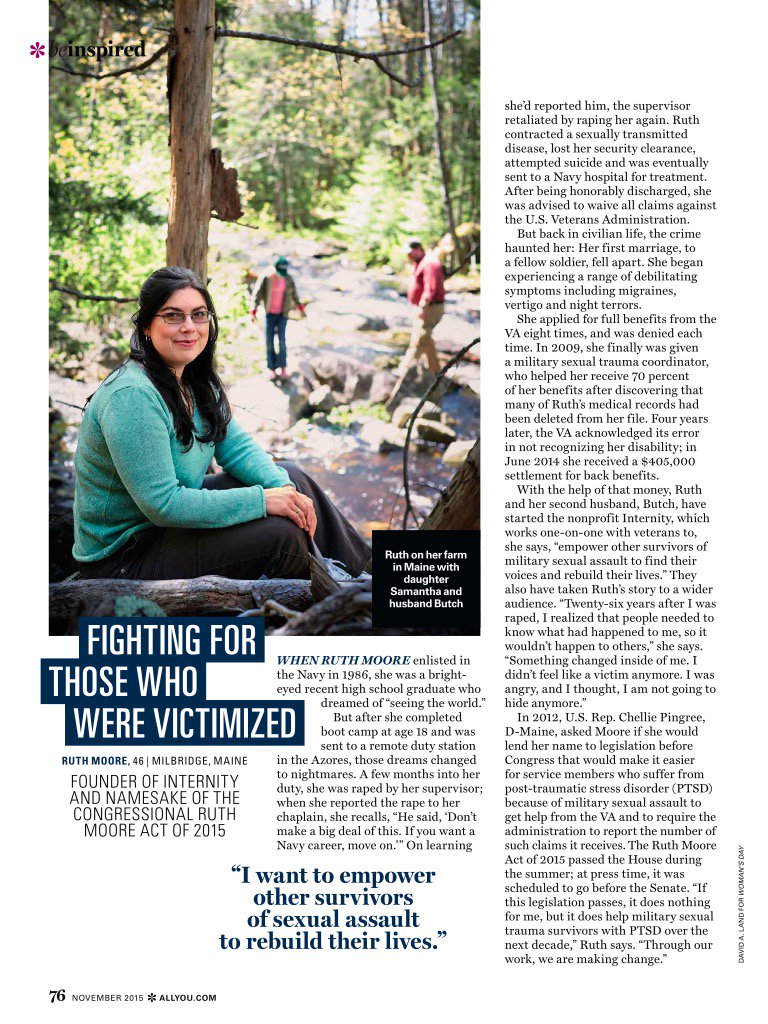
Fighting For Those Who Were Victimized

Grantee Ruth Moore is making an impact for survivors of sexual assault in the military. Her story was the focus of an article in All You magazine’s November issue. Ruth Moore All You

Denver native reaches out through fitness

A psychology major with background as a personal trainer, athletic instructor and support counselor for disabled adults,Jared Ciner channeled these passions into the Spirit Club Foundation with an eye toward creating and opening up

health and fitness opportunities for people with disabilities. Founded in April 2013, the Spirit Club offers group and individual exercise and socially inclusive programming that teach its participants to adopt healthy and active lifestyles.

Ciner was recently introduced to the Good People Fund (GPF) and received an opening grant of $5,000 to support his efforts. GPF is an organization rooted in the Jewish tradition of tikkun olam (repairing the world) and offers financial support and mentorship to small, effective initiatives in Israel and the US.

Ciner grew up in Denver where he attended Jewish day school,was actively involved with the Denver JCC and spent a year studying and volunteering in Israel. He credits his parents’ deep connection to Judaism and their encouragement of Jewish practice and values as having had a huge impact on his life today. His father, Denverite Sheldon Ciner,DDS, is a mohel.

The summer after college, Jared Ciner spent one month in Ethiopia volunteering at a school for children from severely impoverished backgrounds. While there, he organized sports and exercise activities for them. The experience inspired Ciner to pursue a profession that would include fitness for underserved populations. After receiving a BA in psychology from the University of Maryland and certification as a personal trainer, he began working as a support counselor for people with developmental disabilities.

Within one year created the Spirit Club. He now lives in Bethesda, Md. “After speaking to Jared we knew that his unique focus on this type of service for people with disabilities was something we wanted to be part of,” says Naomi Eisenberger, founder and executive director of GPF. Eisenberger had just returned from a visit with Ciner and Spirit Club members. “We support Jared and Spirit Club’s successful efforts to bring access to fitness and overall well being to this often overlooked community.”

Spirit Club members attend hour-long classes each week instructed by at least two certified personal trainers. The classes open with interactive themed exercises that give each member a chance to introduce himself or herself. The activities incorporate different types of fitness equipment, such as medicine balls, resistance bands, stability balls and agility ladders. All members are provided with portfolios to track their progress throughout the week. The classes conclude with a review of home health assignments, healthy snacks and time to socialize and consult with the personal trainers. Spirit Club’s co-founder, Sam Smith, a proud man with autism, is also a certified strength and conditioning specialist. Smith’s goal is to motivate others with his passion and enthusiasm for health and fitness.

Ciner says,“We are excited to now be part of the Good People Fund’s circle of grantees. “The demand for our services continues to increase and this assistance will enable us to offer fitness and health programming to people with disabilities throughout Maryland.”

Information: news@goodpeoplefund.org, www.spirit-club.org

With nonprofit, Max Levitt connects donors with sports programs in need

A dozen drawings lined the wall next to Max Levitt’s lofted bed in his Syracuse fraternity house.

They came from 12 kids at a small school near the Singita Game Reserve in eastern South Africa that his family visited on vacation. Levitt, a Rockville native, said he had delivered two duffel bags of sporting equipment to the children, whose lone activity before then was chasing one another around the hot blacktop barefoot.

It became the first of many donations for Levitt, who five years later runs a nonprofit that distributes sporting equipment to underprivileged kids in the Washington and Baltimore areas. Levitt believes his organization, Leveling the Playing Field Inc., is the largest multisport equipment donation business in the country.

While the 2010 vacation wasn’t designed as a community service trip, Levitt knew the surrounding villages could use the help. So he reached out to about six high school friends the summer before his senior year at Syracuse to gather as much sporting equipment as he could take on the flight.

“The impact it had on that school and those teachers and those kids was insane,” Levitt said. “Just like how excited they were and how shocked they were to get this stuff. It was so simple to have done for me.”

He had considered working as a sports agent or in public relations, but the expressions on the kids’ faces in the small African village made him reconsider.

“That’s when I first kind of started thinking … ‘maybe this [is] the road I want to go to in sports,'” Levitt said. “I can have security. I can be my own boss. I can do good things for the community. A lot of people focus on the negative in sports, but I can shift the focus to the positive.”

Levitt has watched his idea blossom — the nonprofit has distributed more than $900,000 of equipment to programs in the area since November 2012.

As Levitt sat at his desk as a sales associate at LivingSocial in late May 2013, his cellphone started to ring. He sneaked away to the stairwell, which had become his secondary office, to answer a call that gave him the push he needed to go all in.

On the other end was D.C. United, which had found Levitt online and wanted to do a collection drive with him at a game. At the time, Levitt had been working in sales for about two years, operating Leveling the Playing Field on the side.

“I was like, ‘Wow, I’m not even doing this full time, and it’s grown to the point where a professional soccer team has found me organically and wants to do a collection,'” Levitt said. “It was at that moment when I decided I was doing this full time. I could see that this was going to work.”

He put in his two weeks’ notice at LivingSocial shortly after that phone conversation.

It was a welcome reprieve for Levitt, who had been racing home to his parents’ basement — from which he operated the one-man company — from Chinatown at 5:30 p.m. each day, only to stay up until midnight making spreadsheets, sending emails and calling universities that might become donors and organizations looking for equipment.

“No one was listening to me,” Levitt said. “I hadn’t made any donations. I didn’t have a warehouse. I didn’t have a very good website. There wasn’t a lot to Leveling the Playing Field at that point. It was really still an idea. There was no proof of concept.”

So he invested $5,000 from his savings, using some of the money to buy a dozen plastic bins from Target to set up collections. He designed a website, too. And while he called it “one of the worst websites I’ve ever seen,” it was functional.

He turned his focus from colleges to the local area, calling churches, synagogues, community centers, swimming pools and schools. The bins he set up in the community began to fill up — cluttering his parents’ basement.

“We looked like a Goodwill agency,” said Kay Klass, Levitt’s mother. “We nagged him hard, but he kind of humored us through it. I was very happy when he was out on his own. Not just for myself and being able to see the floor again, but really just that he had a little more organization.”

To this day, people still stop by their driveway — even though Levitt has moved out — to drop off equipment they want to donate. About a year ago, Under Armour showed up at his parents’ house, and Klass answered the door.

They said they had some unsold equipment they were supposed to drop off. She told them Levitt had a 4,000-square-foot warehouse in Silver Spring now, but they could put it in the garage for him to come pick up. The worker then turned and pointed to the semi-truck outside. It wouldn’t fit, they said.

‘Can’t imagine anything better’

With the back of a U-Haul filled to the brim with sports equipment June 9, Levitt drove to Baltimore. About a year earlier, he had made his first big donations in the city, dropping off about $50,000 worth of baseball equipment to James Mosher and Hamilton, two youth baseball leagues.

Levitt said Baltimore was an “obvious expansion.” He said more kids are in need of sporting equipment here, where 86 percent of city students received free or reduced lunch in 2014, according to the Annie E. Casey Foundation’s Kids Count Data Center.

Levitt, who hopes to eventually franchise his business model to reach more cities, estimated he travels to Baltimore once a week, sometimes for meetings with potential clients and other days for drop-offs. And because renting a U-Haul for the 45-minute drive gets expensive — he said it averages about $300 a trip with gas — he tries to plan at least four drop-offs per visit.

The first stop on his June 9 trip was Randallstown High School, where athletic director Michael Gelman said he has about $6 to spend per athlete. With football helmets and pads costing more than $100, it isn’t feasible to provide equipment for students on all the school’s teams.

So, when he got an email about Levitt and what he had to offer, Gelman reached out to Levitt within 30 seconds. About two months later, Levitt was carrying bags filled with basketballs, soccer balls and lacrosse sticks, among other equipment, into a storage room at the school.

“This will open up the eyes of the coaches and the kids,” Gelman said. “This is phenomenal. This a blessing. I don’t know what to say. It will offer us opportunities we haven’t had in the past.”

After making a stop at the Parks and People’s storage unit to receive equipment from sports director David Johnson, who had received equipment from Leveling the Playing Field in the past, Levitt drove to the Druid Hill YMCA. Archie Cumberbatch Sr., a coordinator at the organization, had sent Levitt a wish list, but did not get his hopes up.

Then Levitt arrived with a truck full of equipment.

“I’ve been here for 6 1/2 years, nobody ever donated equipment to us, not like that,” Cumberbatch said. “Maybe an item here or an item there, but not a quantity that we had today.”

Cumberbatch said the YMCA has sometimes had to invent games because of its lack of equipment. That won’t be needed anymore.

“You have individuals that want to create an opportunity for the kids but don’t have the funding or the infrastructure to set something up,” Johnson said. “And then what Leveling the Playing Field does is it kind of eliminates the hurdle of trying to get equipment or uniforms or those little things that may just be the only thing that’s keeping you from really starting a successful program and really impacting the community.”

Levitt said it’s rewarding to hear from a child’s parent or coach, who better understand the long-term positive effect sports can have.

“If you are grinding out there to put dinner on the table and you can’t give your kid something as simple as a glove and a ball, that can’t be a great feeling as a parent,” Levitt said. “So seeing how grateful they are to give their kids that opportunity, for me, is almost more gratifying than seeing the kid’s expression.”

But he’ll never forget those drawings that lined his bedroom wall.

twitter.com/RyanBaillargeon

http://www.baltimoresun.com/sports/outdoors/bs-sp-leveling-the-playing-field-1004-20151001-story.html

  • « Go to Previous Page
  • Page 1
  • Interim pages omitted …
  • Page 4
  • Page 5
  • Page 6
  • Page 7
  • Page 8
  • Go to Next Page »

Primary Sidebar

Tzedakah Diaries

The Good People Fund is all about stories that share the goodness within each of us and the way that goodness can change the world, bit by bit. Read on and find out why we love our work, helping extraordinary people. . . .

  • New Kitchen, New Opportunities for Kaima Nahalal’s Youth

    November 5, 2025 9:31 pm

  • For Good PGH Brings Halloween Joy to Every Child

    November 5, 2025 9:29 pm

  • New Partnerships Build Bridges through Theater

    October 24, 2025 1:32 pm

  • Trailblazing a Path for Ethiopian Israeli Women

    October 24, 2025 1:15 pm

  • Grantee makes front page of Miami Herald!

    October 24, 2025 1:11 pm

Footer

Candid Gold Transparency Award Charity Navigator Four-Star Rating
Safety. Respect. Equity. — SRE Network Affiliate

Get Inspired

Get uplifting stories of how ordinary people are changing the world in extraordinary ways. Subscribe to our monthly newsletter.

Subscribe

Recent Updates

  • Saying Yes to Goodness: Thanksgiving Reflections
  • New Kitchen, New Opportunities for Kaima Nahalal’s Youth
  • Facebook
  • Instagram
  • YouTube

Copyright © 2025 The Good People Fund, Inc. | All Right Reserved | Website by DoSiDo Design and Insight Dezign 26-1887249

It’s Here!
GPF Journal of Good 2025

Our Journal of Good 2025 captures the positive change that each of us in the GPF family helps to create and advance in a challenged world. Marking our 18th (“chai”) anniversary, the 2025 Journal of Good is a force for the possible.


Empower More Good

Want more good news?

Sign up here for our newsletter!

Good News

The Good People FundLogo Header Menu
  • About
    • Mission and Vision
    • Values
    • Plan for Good (Our Strategic Plan)
    • Our Story
    • Professional Leadership
    • Board of Trustees
    • Financial Information
    • Privacy Policy
    • FAQ’s
    • Contact Us
  • Our Grantees
    • New Grantees
    • By Program Focus
    • By Location
    • By Organization
    • Alumni Grantees
  • How to Help
    • Donate Now
    • October 7 and After
    • Acknowledgement Cards
    • Planned Giving
    • Charitable Solicitation Disclosure Statement
  • Learning
    • Good People Learn
    • Our Educational Philosophy
    • For Jewish Educators
      • Our Good Service Model
      • Grab ‘n’ Go Lessons
      • GPF Core Curriculum
      • B’nai Mitzvah Service Projects
      • Archival Materials
      • Ziv Tzedakah Curriculum
    • For Students
      • Tips for Good Service Projects
      • Other Resources
  • Media
    • Newsroom
      • Grantees in the News
      • GPF in the News
      • Press Releases
      • 10th Anniversary
    • Grantee Focus
    • Videos
  • Good News
    • Good News Stories
    • Executive Director Messages
  • Podcasts
  • Journal of Good
    • Journal of Good
    • Stories of Hope
    • Journal of Good – Prior Years