• Skip to primary navigation
  • Skip to main content
  • Skip to primary sidebar
  • Skip to footer
 
LOG-IN
DONATE NOW
SUBSCRIBE
The Good People Fund

The Good People Fund

  • About
    • Mission and Vision
    • Values
    • Plan for Good (Our Strategic Plan)
    • Our Story
    • Professional Leadership
    • Board of Trustees
    • Financial Information
    • Privacy Policy
    • FAQ’s
    • Contact Us
  • Our Grantees
    • New Grantees
    • By Program Focus
    • By Location
    • By Organization
    • Alumni Grantees
  • How to Help
    • Donate Now
    • Acknowledgement Cards
    • Planned Giving
    • Charitable Solicitation Disclosure Statement
  • Learning
    • Our Educational Philosophy
    • For Jewish Educators
      • Our Good Service Model
      • Grab ‘n’ Go Lessons
      • GPF Core Curriculum
      • B’nai Mitzvah Service Projects
      • Archival Materials
      • Ziv Tzedakah Curriculum
    • For Students
      • Tips for Good Service Projects
      • Other Resources
  • Media
    • Newsroom
      • Grantees in the News
      • GPF in the News
      • Press Releases
      • 10th Anniversary
    • Grantee Focus
    • Videos
  • Good News
    • Good News Stories
    • Executive Director Messages
  • Podcasts
  • Journal of Good
    • Journal of Good
    • Stories of Hope
    • Journal of Good – Prior Years
You are here: Home / Archives for GPF in the News

GPF in the News

eJP Pic of the Day

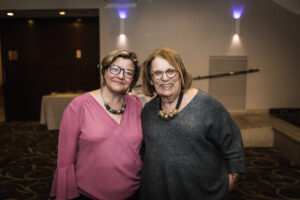
Naomi and Julie 18th Anniversary dinner tel aviv

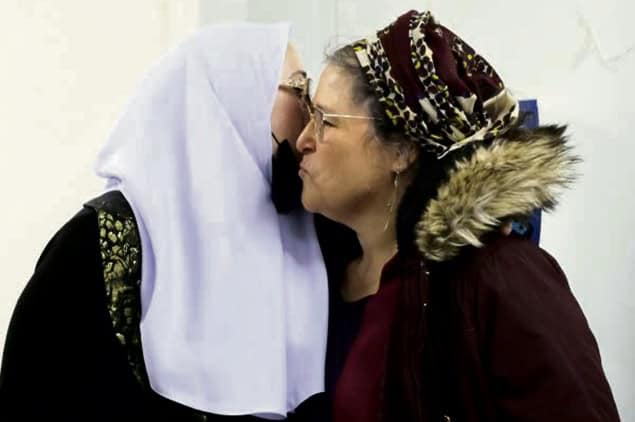
Naomi Eisenberger, the founder and executive director of the grassroots-focused The Good People Fund, hugs Julie Fisher, the group’s associate executive director who will succeed Eisenberger in July, at the organization’s 18th anniversary celebration last night at Tel Aviv’s Renaissance Hotel, eJewishPhilanthropy’s Judah Ari Gross reports from the scene. Read eJP’s interview with Fisher from December here.

During the event, which also marked the impending leadership transition, Eisenberger got teary-eyed reflecting on the fund’s 18 years of work and her nearly 15 years of philanthropic activities at GPF’s predecessor, the Ziv Tzedakah Fund. “It has been an incredible, incredible honor for me to spend my days for the last time 30-plus years doing this… This, as I have said to Julie many times, this is holy work — with a capital H and a capital W. And that is the truth, that people give us their hard-earned money to take it and give it to people who are often invisible and to give them that boost,” she said, addressing the many grantees in the room, some of whom got their first funding from GPF.

“It’s very unusual for a small organization to be able to have its work continue. And I am sort of pinching myself that this organization will be able to continue,” Eisenberger said. “As I look around this room and I see so many of you who are from the early days — my cup runneth over, it really does. I cannot believe that this is what I was able to do with my life… Julie has guided this transition. When Julie came on board, we did a strategic plan, we came up with a plan. Founder-led organizations run a certain way, and when they get to be big, they have to be run a certain other way. And I’m living through the rules. Julie, it’s truly an honor for me to turn it over to you.”
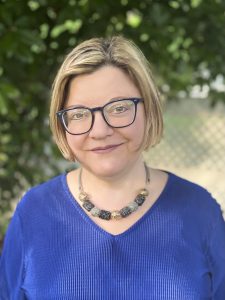
Bringing extensive Israel experience, Julie Fisher readies to take helm of the Good People Fund

In 2008, Naomi Eisenberger founded the Good People Fund, a grantmaking organization that provides financial support and mentorship to small and mid-sized nonprofits led by changemakers — referred to as “Good People.”

Before launching the Good People Fund, Eisenberger, a nonprofit leader and business professional with a background in education, served as managing director of the Ziv Tzedakah Fund. Like GPF, Ziv Tzedakah supported grassroots charitable projects, primarily in Israel. Eisenberger was a mentee of Ziv’s founder, Danny Siegel, and spent more than a decade at the fund until Siegel closed it, citing its growth as an obstacle to maintaining the lean, hands-on model that had defined its early years.

Eighteen years after founding the Good People Fund, Eisenberger is passing the torch to Julie Fisher, a nonprofit leader in her own right. Fisher founded the Consortium for Israel and the Asylum Seekers, which advocates for African asylum seekers in Israel, and served six years on the board of trustees of the Walworth Barbour American International School in Israel.

Fisher is also a longtime mentee of Eisenberger’s. The two met at a Good People Fund event in Israel eight years ago, while Fisher’s spouse, Daniel Shapiro, was serving as U.S. ambassador to Israel. After returning to the United States, Fisher became GPF’s first director of engagement in 2023. Earlier this year, she was named associate executive director, and in July, she will assume the role of executive director, while Eisenberger transitions to executive director emeritus and “master mentor.”

Earlier this month, Fisher spoke to eJewishPhilanthropy about the leadership transition, how to identify “good people” and the challenges both Israeli and American grantees have faced of late.

The interview has been lightly edited for clarity.

Nira Dayanim: Come July, you’ll be the executive director of the Good People Fund. What have the last few months looked like since that transition was announced, and what’s on the horizon as you step into the role?

Julie Fisher: I have been involved with the fund and a fan and mentee of Naomi Eisenberger for the past eight years. So although this news may feel new and exciting, it’s actually the culmination of a path that we’ve been on together for eight wonderful years, starting with the night I met Naomi in Tel Aviv at the 10th anniversary of the Good People Fund. Before coming on board officially, I’ve been a supporter of their work and been following along in the journey all of this time. It feels really wonderful to be taking this next step.

We are on a journey of transition that is built on trust and friendship and respect, working with our board, working directly with Naomi and little by little, taking over more responsibilities of running the organization. Naomi in July, will move into her encore role, where she will be working with alumni grantees, and she will be doing outreach for us, and she will be sharing her wisdom and expertise of all of these years with us. We feel very lucky that she’s agreed to stay on and to have a role in the future.

Last year, Naomi and I and the board together, went through a strategic planning process where we looked at: How has the Good People Fund been able to impact for the last 18 years, and what do we need to do to sustain that good for the next 18 years? And through that process, we have a very clear path forward of strategic priorities that includes strengthening our program and ensuring financial sustainability, refreshing our governance and infrastructure, and one of our goals was leading a thoughtful transition.

ND: Can you tell me more about how you met Naomi?

JF: I was in Israel because my husband, Dan, was the ambassador from the United States to Israel, and I left my job in education to go with him and help serve our country. And while I was there, I wasn’t able to work in the embassy or around the local economy, and I began to look for ways to be involved and make a difference outside of my roles and responsibilities within the embassy as the spouse of the US ambassador and, of course, as a mom of three young children.

I became immersed in supporting the African asylum-seeking and refugee community in South Tel Aviv for almost the entire time that I lived in Israel, which ended up being 12 years…Eight years ago, I had been volunteering with a dear friend, Gideon Ben Ami, who is the founder of Pesia’s Kitchen, an organization in Tel Aviv that provides food to those who are hungry, and one day he said to me, “Come and meet my friend Naomi and give a little speech at the 10th anniversary of the Good People Fund.” I had no idea what the Good People Fund was, and I had no idea who his friend Naomi was, but I wanted to honor his request. So I took Dan with me, we went to the restaurant, and I gave my little speech about the incredible innovation that I saw in the social services sector. I always say people always think about “Startup Nation” in the technology area but what I saw was innovation and people looking around and seeing inequities and standing up and finding creative ways to offer dignity and hope and healing. Then we met Naomi. We have a photo of the very first minute that we ever met, which is neat, especially now. I didn’t realize at the time that that evening, eight years ago, was going to change the path of my life in a fundamental way.

The Good People Fund grantees from Israel stood up one by one, telling their absolutely beautiful stories… the incredible creativity and innovation of the responses to vulnerability and need was astounding, and I was hooked; that was it. I left thinking, “I’m going to follow the Good People Fund and do whatever I can to help.” Naomi became my mentor and friend, and that has led us to this transition that’s happening today, or I am inheriting the organization that she created, which is such an honor and a privilege.

ND: Working with those at the early stages of their projects, how do you discern between a beautiful story and an opportunity for making marked change? To what extent is that a gut decision versus a formal process?

JF: I would say it’s a combination between gut and logic and really good vetting. I mean, we like to joke that Naomi Eisenberger, our founder, has been doing this for a long time, and her gut is incredible. She knows. And if you look at our numbers, we now have over 260 alumni grantees. So we see our impact, and we see that our numbers are much, much higher than the normal rate of organizations that make it. With our support, we find that our social visionaries are more likely to make it through the beginning years of starting their organizations. We have a system of careful vetting our grantees. We often find them on our own. Every once in a while, some find us, but we really pride ourselves on finding our grantees through careful research, through asking our extended network of trusted folks in the field, in the U.S. and in Israel, who know what we’re looking for and that we are different from other funders, and will often send us kind of the gems that they discover in our in our area of beginning stage, social visionaries. Your question is a really good one. How do you know? We meet with each social visionary, individually, we spend a lot of time hearing about their story, not just measuring the passion that they feel, but also talking about what, what is their plan, and how do they intend to impact and to make a difference, and where, where’s their motivation coming from? What kind of resources do they have available? How can we help them? We most often find social visionaries who have already registered as a 501c3 or in Israel, they have their 46 alef but sometimes we find someone with a brilliant, creative idea to repair or heal or give dignity where it’s most needed and we will help them become an organization. We will provide a pro bono lawyer to help them with their paperwork, and we will invest in them from Day 1. We have several alums where we gave them their first check in the U.S., and several in Israel, where we were their first supporter outside of Israel, and we helped bring them visibility. And now they’re kind of superstars in the field, and we pride ourselves on that.

ND: Does having that relationship with early-stage changemakers put you in touch with emerging needs that are not yet on the philanthropic radar? If so, what are some of those trends?

JF: Working with social visionaries at the beginning of their journeys has always been a place in the sort of philanthropic ecosystem that is rife with challenges. People always have the passion for their mission and for wanting to make change and to repair, and often struggle to find the funding and to find the support, especially when they don’t yet have any impact reporting, because they are new. So we are in that space, in the philanthropic ecosystem, and there aren’t a lot of us in that space. We take a calculated bet on the social visionaries who are at the beginning of their journey. There are unique challenges now, and there are always challenges for the brave folks who are in this space, the beginning space. We have seen a plethora of inquiries, and of support larger than ever, this year, even larger than last year. Of organizations that are our targets, and that there are more of them than usual.

A lot of our grantees, because they’re so small, they’re not as well known, they did not receive a lot of the emergency money that was raised by the primarily American Jewish community post Oct. 7. So the billions of dollars that were funneling in didn’t trickle down to many of our grantees, and in fact, some of our grantees who are not in the space of addressing trauma, in particular, found that they lost some of their funding. At the same time, every single grantee of ours in Israel felt the impact of what the country lived through. So even if it was not necessarily directly related to trauma or the war, every organization was impacted negatively. For example, our organizations that support youth at risk and more people who needed support because of displacement, because of harm to families. So the challenges are significant.

Our founder, Naomi Eisenberger, likes to say, our good people are the canaries in the coal mine, and we can see trends as they’re coming. I believe that this is true…some of our young social visionaries who are just beginning to do work in this area, because of the war, were not able to continue and needed to move into more conventional types of employment and not move forward in the social sector, because of things such as spouses who were who were sent off to reserve duty, for weeks and months at a time. So the ability for young social visionaries in Israel to have the space to innovate and be dedicated to this work, there’s a real question of how that was possible in the last two years and when that will sort of be possible again.

ND: You started doing this work after moving to Israel, and have continued it after moving back to the United States. Can you compare those two experiences?

JF: It’s been really interesting to have had the experience of being immersed in the philanthropic and humanitarian world in Israel for 12 years, and then to come back here and to work in an area that was newer to me on this side of the ocean. To have this incredible opportunity to use my passion for this work and to stay here in the U.S. and in Israel, and to be able to continue those strong relationships that I had developed when I was there for 12 years, and to also do some of the work of bridge building between the American Jewish community and and the Israeli community, which I did from that side. This work allows me to continue that journey. One of the things that has been the most surprising is the connections between our grantees in Israel and in the US. Our grantees are diverse and interesting and come from every background. We are a Jewish organization. We are motivated by our Jewish values, especially of tikkun olam, repairing the world. And in our portfolio of grantees, we have grantees from every religion and every background, and we pride ourselves on that. Last year, we brought everyone together in New York City for our conference for the first time, and we were stunned to see the collaborations that started between grantees doing vastly different work, coming from vastly different backgrounds. That was a delightful surprise. We knew that everyone would get along and they would learn, and we were stunned with the kind of collaboration and cooperation that we have seen since that time with vastly different grantees that’s been absolutely a pleasure to watch and to support.

ND: What did conversations between the Israeli and American grantees look like at the conference? Did you address Oct. 7 and its aftermath, or try to avoid that topic?

JF: We focus on good people doing good things to help others. And what’s amazing is in our beautiful and simple mission of supporting social visionaries as they put more good into the world, we have managed to really stay focused on that. I think that’s part of the beauty of what we do, and I don’t want to jinx ourselves, but we’ve managed to really stay in a very calm and peaceful place with our focus on supporting the good work being done in both countries by actual people who’ve met each other. At our conference in New York City, it was really not about politics or not about the war. It was our focus is wholly on good people, addressing societal challenges and bringing more healing, bringing more dignity in every way.

ND: Was that by design, or did those topics naturally not come up?

JF: The conference was designed to support our social visionaries. The work that our social visionaries do, our good people, as we call them, is draining and difficult. Many of them are isolated, and having these two and a half days together that we had last year in New York was like a breath of fresh air. For our Israeli grantees, it was the first time that many of them had left Israel in a year since Oct. 7, so to have a good night’s sleep without being awoken by sirens was a gift. The conference was really focused on meeting the needs of our grantees, one of those needs was for our Israeli grantees to have a break and to have time to breathe and to be with their peers. And it wasn’t by design, because actually, the conference was scheduled to have occurred the year before, and it was canceled because of Oct 7. It was postponed for a whole year. So it was designed to bring everyone together and to learn and to meet each other for the first time, and that was the goal of the conference. It far exceeded our expectations, because we found that our grantees wanted to connect more. Whether it was someone in food security in Jerusalem or someone addressing food insecurity in Atlanta, Georgia, they obviously had lots to talk about. But the surprising part was people of different religions, faith backgrounds or lived experiences, working on different issues. So someone was working to support families of children with cancer, and someone else was working on a completely different societal challenge, and because they were both social visionaries who started their own organization and where they were struggling with some of the same things, of fundraising or setting up an organization building sustainability. So the kinds of connections that were fostered were too numerous to count.

ND: Do you see similarities in the needs of grassroots changemakers in Israel and the United States?

JF: A similarity that stands out tremendously is the exhaustion that social visionaries are feeling. They’re kind of being hit from all sides. There’s the ongoing humanitarian needs that our good people are trying to address day to day, responding to illness, responding to hunger, responding to societal inequities, and then there are the challenges of the policy implications of what they do and the rollbacks of some of the rights that they fought for. And then there’s the fear. A lot of our social visionaries in both countries are seeing a huge uptick, in need from their beneficiaries, and that impacts them both, on the day to day, as well as when thinking about how to get the resources that they need to continue to fuel their mission and do their good work. So for example, our organizations that support refugees in the United States, of which we have three organizations that support new Americans, they are being hard hit by both an uptick in need and push back in terms of losing some funding, in terms of people being fearful to even come out to their events or come out to get the support that they desperately need.

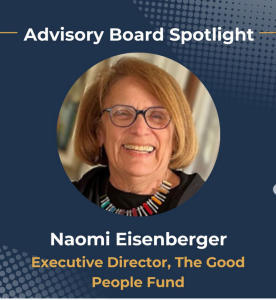
Global Jewry Advisory Board Spotlight

Naomi Eisenberger is a proud “Jersey girl” who has never left the Garden State for greener pastures. She is the Founding Executive Director of The Good People Fund which she helped found prior to 2008’s great economic downturn and the Madoff implosion. In the past 18 years this dynamic, countercultural tzedakah fund has raised not only in excess of $33,000,000, but also a legion of more than 260 small impactful nonprofit organizations in both the United States
and Israel, many of which have grown into mature programs that help make this a kinder and gentler world by easing human suffering in creative ways.

A woman of many talents from an early age, Naomi began her career as a high school American History teacher. While home raising a family she quickly used her talents as a needlepoint pillow maker (remember them?), kosher caterer, and plant doctor when houseplants were de rigeur. Along the way, she took over the family clothing business.

Always an organization junkie and do-gooder, in 1991 she met poet and Mitzvah Guru, Danny Siegel while serving as her synagogue’s President. That chance meeting brought her into the tzedakah world and eventually she served as the first employee of Siegel’s Ziv Tzedakah Fund.In 2007 when he decided to shut down the successful fund, she realized there were many donors who loved the low overhead, grassroots appeal of direct giving to early-stage organizations begun by inspiring individuals, actually Good People. She began The Good People Fund with the help of a cadre of donors and thinkers who believed in this creative model.

In a world of increasing polarity, animosity and hatred, she feels blessed to be able to do this important work with the support of her husband, kids and grandchildren. Life IS good!

Going “On Mic” with Naomi Eisenberger, Co-Founder and Executive Director of The Good People Fund – PODCAST

Jordan Rich, host of the popular On Mic podcast, welcomes Naomi Eisenberger — Co-Founder and Executive Director of The Good People Fund — to a wide ranging conversation touching on GPF’s unique philosophy, reach and impact uplifting individuals and communities at a time of deepening societal needs.

5 timeless lessons about building community in the nonprofit world

The Good People Fund supports individuals and their organizations in the U.S. and Israel leading creative, deep and impactful grassroots efforts to advance positive social change and improve the lives of others. While our grantees represent a broad spectrum of critical work — from providing food security and medical access to fighting antisemitism to empowering women and girls — they have a few things in common: They each punch above their weight, their impact in their communities and beyond disproportionate to the minimal staff and resources with which they make due every day; and they occupy a remote corner of our philanthropic and nonprofit communities, one where their voices are not often heard.

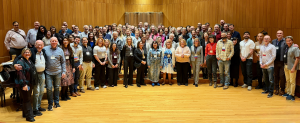
In November 2024, with the support of generous donors, The Good People Fund brought together 65 of its grantees for the first time at a two-day gathering in New York that we called “the (un)conference.” At the gathering, where our grantees learned from experts, shared knowledge and experiences and re-energized their commitment to their work, we also learned a lot through conversation and observation.

Here are five vital lessons we were reminded of during the event:

1. The work of social visionaries can be lonely

Social visionaries pour their hearts and souls into their nonprofit work, often with little support. Some run their organizations with a very small team — or even just by themselves — and sometimes it feels as if their efforts go unnoticed. Yet, despite the isolation and challenges, they continue, driven by an unwavering passion to fill a need they have identified and make the world a better place.

At our gathering, we saw firsthand how crucial it is to recognize and support these individuals. One of our grantees, who works tirelessly on women’s empowerment, recently faced a moment of crisis. Overwhelmed and unsure of how to move forward, she felt the crushing weight of being the sole leader of a small organization. In her moment of doubt, she received an unexpected call from someone she met through a Good People Fund event. The call was a lifeline — a reminder that, even in her loneliness, she is not alone in this journey. That simple gesture lifted her spirits, and in that moment, she realized that even the most solitary paths can be filled with unexpected support and solidarity.

2. The transformative power of togetherness

Bringing people together in person to meet, learn and share ideas ignited a spark of energy that was truly electrifying. The connections, conversations and collaborations that blossomed during our time together were nothing short of magical. This collective synergy reminds us of the profound impact we can have on each other. When we unite, we create something that gives energy not just to ourselves but also to everyone around us.

In the words of one of our grantees, who leads an organization supporting vulnerable youth, “The power of being together was palpable. Hearing others’ stories of success and overcoming challenges gave me hope that I, too, can push through my own struggles. Being together truly felt like magic.” The future-focused conversations and moments of laughter and shared challenges were all a testament to the power of togetherness.

3. Connection’s ripple effects: An expanding impact

The return on investment in these relationships has been nothing short of extraordinary. Grantees are now offering each other meaningful support through visits, phone calls, shared projects, referrals and more. Grantees have visited one another’s projects, featured each other on their podcasts, shared each other’s posts on social media and engaged in so many follow-up interactions and collaborations that the list is too long to fully capture.

This wave of reciprocal giving and receiving, which we’ve come to call “the ripple effect,” has far surpassed our expectations. It highlights how building a strong community can amplify impact in ways that are nearly impossible to quantify.

One example that stands out is Rutie Pilz-Burstein, founder of the Israeli nonprofit Sport – Bridge to Education, who recently brought her team of educators to visit Yoni Yefet Reich at Kaima Farm, a previous Good People Fund grantee, in Beit Zayit, Israel. Rutie wanted her staff to draw inspiration from the organizations’ shared values and commitment to vulnerable youth and benefit from Yoni’s years of leadership and Kaima Farm’s successful program — and they were truly inspired.

We have a list of dozens of these “ripples,” and we know they are just a glimpse of the broader impact that has unfolded. The ripple effect continues to grow, creating connections and fostering collaborations that extend far beyond what we initially envisioned.

4. We need each other now more than ever

In a world that often feels fragmented and divided, the importance of coming together has never been more crucial. By partnering across sectors, geography and causes, we can address the immense societal challenges we face. When we unite, we don’t just accomplish more — we ignite each other’s passion. This shared energy fuels our determination, giving us the oxygen to continue our work and make a meaningful difference.

Following our recent gathering, the message was clear: being together made us stronger, alleviating loneliness and fostering the exchange of ideas. In response, we’ve launched a pilot Community of Practice, where eight nonprofit leaders will come together to support one another and continue building on these vital connections.

As one attendee shared, “This was like a breath of fresh air — a place of hope and warmth, nurturing human connection. It felt like a lighthouse in a stormy sea, reminding me that even in the toughest times, there are principled people out there who act, support and illuminate the world with compassion and understanding.”

Together, we are stronger, and we can keep shining a light of hope in the world.

5. Collaboration, not competition

Collaboration doesn’t just benefit individuals; it strengthens entire communities.

In a world where nonprofit organizations are often pressured to compete for scarce resources, we’ve seen that true success lies in working together. This is a paradigm shift: Helping one another is not a weakness — it’s a strength. When we collaborate, everyone thrives.

At our gathering, grantees shared invaluable knowledge with each other, whether it was fundraising strategies or helpful connections to potential partners. The impact of this collaboration has been profound. With our gathering just three months behind us, we already have numerous examples. Here’s a favorite: At our event, Alma Schneider and Iris Mehler — founders of 1in6 Support, which supports families of children with disabilities — met John Beltzer, founder of the Songs of Love Foundation. During the event, John led us in a beautiful activity: recording a song for Zeke, a child with severe health challenges. Through the interaction between Beltzer and Schneider and Mehler, a new partnership was born, and now the families of 1in6 Support will benefit from access to the support provided by the Songs of Love Foundation as well.

We are living in a time of global upheaval and transition. For all of us on the nonprofit spectrum — whether we work in small neighborhoods or across global networks — the need for strong, connected communities has never been more urgent.

 Julie Fisher is the associate executive director of The Good People Fund.

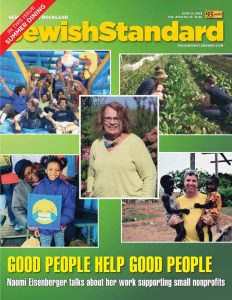
Good People Help Good People

Good People Fund and Naomi Eisenberger on the cover of the Jewish Standard magazine
Good People Fund and Naomi Eisenberger on the cover of Jewish Standard magazine
Cover of Jewish Standard Magazine, June 14, 2024

Not all charities and nonprofits are big. Not all of them need huge infusions of cash from single donors, big foundations and funds, and other large organizations. Not all of them have to be filtered through a logistically and bureaucratically necessary but still time- and soul-sucking set of requirements.

Some of them are small and nimble. The help they provide is less systemic than individualized and personal. Their creators can use mentoring to guide the internal fires that propel them.

Both kinds of organizations are necessary, but the smaller ones can be less visible.

Naomi Eisenberger sees them. And her background as a serial entrepreneur, shul leader, and volunteer has developed her internal Rolodex, taught her to listen intently, and equipped her to provide those nonprofits with the help they need.

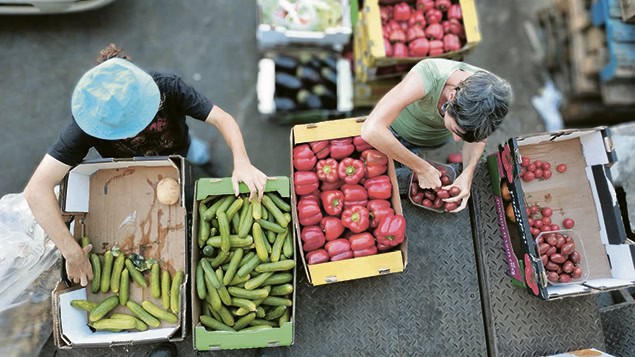
The Jerusalem-based JLM Food Rescuers salvages food for people in need.

Her 17-year-old Good People Fund has given more than $23.2 million to support 242 programs, spent not quite five percent of what it’s raised on expenses, and because some donations are designated for administrative costs, has spent nothing else on overhead.

That’s not bad for an organization that until this year has had only one employee — Naomi Eisenberger.

So who is she?

To begin with, Ms. Eisenberger’s got deep roots in New Jersey. “I’m from Caldwell,” she said. “My parents came from Manhattan and the Bronx to Caldwell in 1932. My father, George Kaplan, came with his brother-in-law to start a men’s clothing store, and he and my mother, Molly, basically became pillars of the Jewish community.”

Naomi Eisenberger

Caldwell was a small town then; much of it was farmland, Ms. Eisenberger said. “My parents were one of the first Jewish families in town. They opened a small synagogue, Agudath Israel” — now it’s a prominent, flourishing Conservative shul — “and my father was president there.”

Men’s clothing stores seemed to run in the extended Kaplan family’s DNA. Ms. Eisenberger’s father’s store, the Caldwell Men’s Shop, “stood in the middle of Bloomfield Avenue until 1996,” Ms. Eisenberger said; in 1986, she and her husband, Gerry, bought it from her father.

After she graduated from public school in town, Ms. Eisenberger went to Montclair State, and then taught history in Whippany Park High School. She and Gerry moved to Millburn. Then they had children — two of them, Andrew, who now is married, the father of three children, and an oncologist at Columbia Presbyterian, and Sara, a former social worker, the mother of three daughters, who lives nearby in Short Hills — and she became a serial entrepreneur. “I started a plant decorating business, and then I had a needlepoint finishing business, and then I became a kosher caterer,” she said. It was the 1980s, and those businesses were on trend. People decorated their houses with plants, they loved making needlepoint but didn’t know how to turn the finished product into something usable, and it was possible to run a catering business out of your own kitchen. “I was following trends, and I did things that I was good at and cared about,” Ms. Eisenberger said.

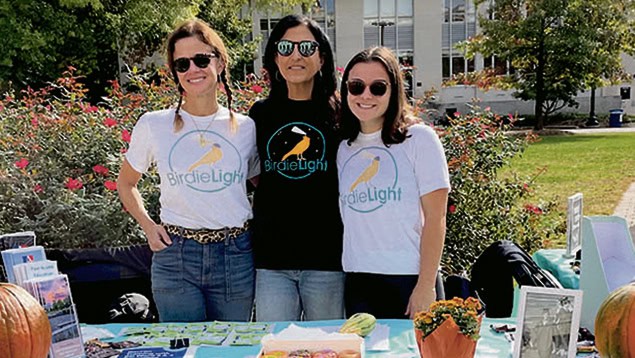
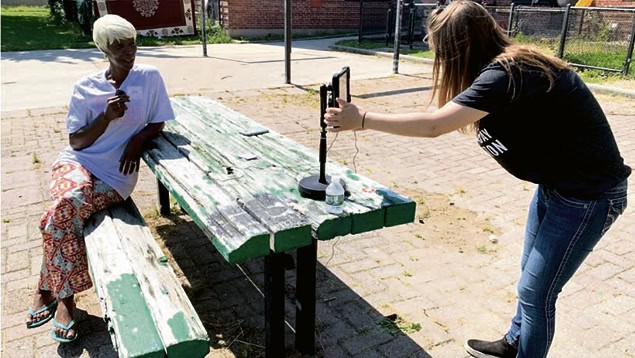
BirdieLight reaches high school and college students across the U.S., educating about fentanyl and distributing test strips.

She was also learning a great deal about working with people, figuring out what they wanted and what they needed, and how to adapt as time, technology, and the world around her changed.

In 1991, her children were in college, she had just been diagnosed with breast cancer, and she was the newly elected president of her shul, Congregation B’nai Israel in Milburn. “I was in the rabbi’s study” — that was Steven Bayar, now rabbi emeritus — “just about to go on vacation, and I saw some books on his shelf written by Danny Siegel.

“I had never heard of him.”

Danny Siegel is a philanthropist, poet, writer, and charismatic animating spirit behind the Conservative movement’s youth group, USY; he was the international president in 1962, and has influenced generations of once-young people ever since. Ms. Eisenberger had been a USYer, but she hadn’t gone on Pilgrimage, as the group’s summer trips were called, and she hadn’t been active on the national level. Somehow, she hadn’t been influenced by Mr. Siegel — at least consciously.

“So when I saw these books, I asked Rabbi Bayar ‘What is this about?’ and he said ‘Take these books and read them on vacation.’

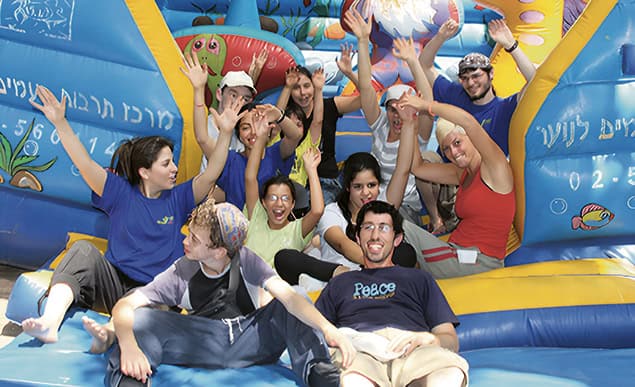
In Israel, Shutaf provides special-needs kids with time away at overnight camp.

“I did, and I was blown away.

“So I came back and said that we have to bring him here. Our plan was to start a tikkun olam committee — we didn’t have one then — so we hired him for a Shabbat as speaker in residence.

“Like most people, I was totally blown away.”

That was the first time they met, and they stayed in touch. “Then, a few years later, he asked me if I would like to volunteer for his organization, the Ziv Tzedakah Fund, and I said omigod yes! It kind of felt like being anointed.

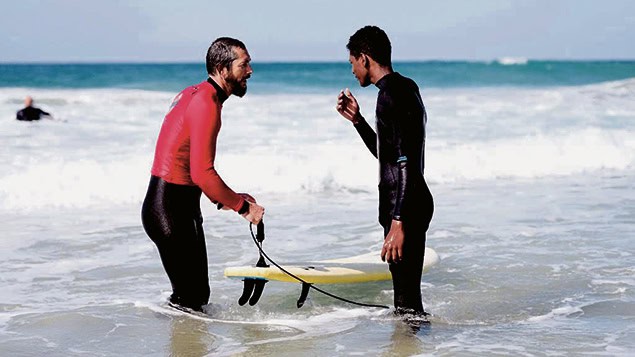
Waves of Hope provides water therapy and unexpected healing to disaffected young Israelis.

“So I drove down to Rockville,” Maryland, where he lived, “and I gathered up all the records, and I became the volunteer administrator.

“At the same time, we were running our family business, which by that point we had bought from my father.” It was a lot, even for someone as energetic as Ms. Eisenberger.

“I went to Israel with him in the summer, I became very interested in his program, I got to know the grantees, I went to CAJE conferences with him” — that’s the now-defunct Coalition for the Advancement of Jewish Education.

“And then in ’95, when we decided to close the store, I said to Danny, ‘I can’t continue to do this. I have to get a job. You either have to hire me or I have to go.’

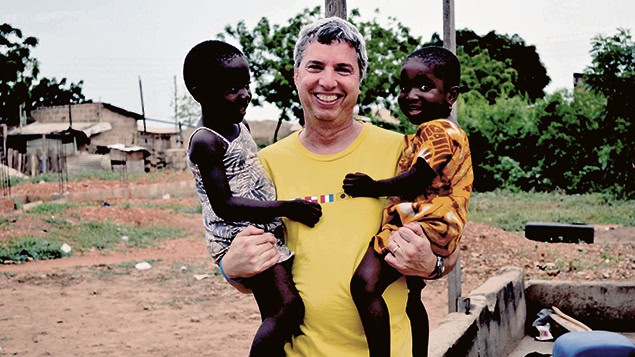
Evan Robbins of Metuchen works with poor children in Africa through his organization, Breaking the Chain Through Education.

“He was of the school that you don’t use donated money to pay anyone’s salary, but he found a donor who would pay a half-time salary.” So Ms. Eisenberger worked half-time for the Ziv Tzedakah Fund and half-time for the United Synagogue of Conservative Judaism, out of USCJ’s New Jersey office.

That didn’t last, though. She was far more interested in philanthropy than movement politics. “So I said to Danny, ‘Full time or nothing,’ and I ended up working full time as the managing director of the fund.”

That lasted until 2007, “when Danny announced that he was retiring. ‘You’ll land on your feet, Naomi,’ he told me.”

When she began to work for Danny Siegel’s fund, it was raising $250,000 a year, she said; by the time he shuttered it, it was raising $2 million annually, and that money was doing good work. So “the night the board voted to close, I just blurted out, ‘This work is too important. We are doing too much good. Our donors believe in us. I’ll start over.’

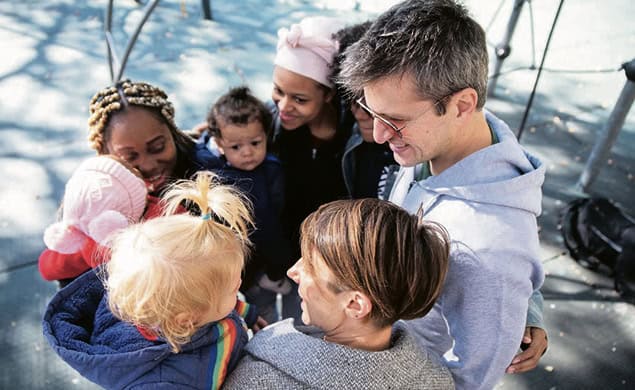
Everyday Boston, led by a storyteller, is powered by the idea that stereotypes divide but stories connect.

“The next morning I got on the phone and called seven donors.

“I sat down with a friend and we wrote a business plan — he was my first board chair. We came up with a budget. I had to raise $175,000 for each of the first two years. I reached out, and those seven donors I called gave me the money we needed to start.

“We incorporated in the state of New Jersey in 2007. We opened the Good People Fund on May 1. That was 17 years ago.

“My office then was in my son’s bedroom. And it still is.”

What drives her?

“This is not a job,” Ms. Eisenberger said. “This is holy work. Literally holy work.

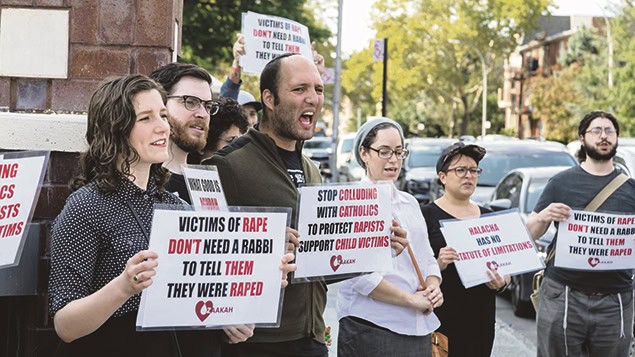
Za’akah provides support and help to survivors of child sexual abuse in the Orthodox community.

“I don’t have a bad moment, because it is only doing good, and I get to hang out with the best people God has put on this earth.

“We seek out and support small grassroots organizations in the United States and in Israel. They don’t have to be Jewish — in Israel they can be Jewish or Bedouin or Muslim. We fund them.

“And we mentor them.

“Something that’s common to all of them is they each have an individual or small group of people who are visionaries. People who have identified problems in the world and have found creative ways to solve those problems.

The Survivor Mitzvah Project gives financial support to Holocaust survivors in Eastern Europe.

“That’s the essence of what we do. These are people who fly under the radar. They are not people who big organizations will fund. Our goal is to make them more visible and help them outgrow us.”

The Good People Fund purposely works only with small organizations. “We will fund only up to a certain budget size,” Ms. Eisenberger said. “Most of them are volunteer-run; if there is any staff, it’s a small one, but often the founder is working alone.

“For the most part, they work in areas that are ‘social-service oriented’” — she used air quotes there. “Programs deal with refugee issues, women’s empowerment, disabilities, hunger, poverty, hatred.”

Combating hatred sounds like an amorphous task, but Good People has funded such groups as Civic Spirit USA, which teaches civics in faith-based schools as a sane way to understand how things should work; Fighting Online Antisemitism, an Israel-based nonprofit whose volunteers recognize and report cyberhatred; Road to Recovery, which takes sick Palestinian children through checkpoints to Israeli hospitals; Tag Meir, which, in response to the violent death of an innocent woman, brings Israeli Jews and Arabs together in mourning and then in hope; and TribeTalk, which helps prepare American Jewish college students to confront hate on campus.

Tag Meir, in Israel, brings people of different backgrounds together to talk and eventually to trust.

As these programs show, Good People can respond to changing needs quickly.

“Because we are very small and nimble, we can pivot,” Ms. Eisenberger said. So a few years ago, when it became obvious that hatred was becoming a problem, we went looking for programs that address hatred in creative, impactful ways.

“There is no shortage of programs like that. There are many people out there who are working very quietly but very effectively, and it is our honor and privilege to be able to help them.

“We have a minimal amount of bureaucracy, and our work is very hands-on. My days are spent mentoring and listening. When you are running a small organization, it can be a very lonely existence. You start to question yourself. ‘Why am I doing this? Does it really make a difference?’

New York-based New Neighbors Partnership matches newly arrived refugee, asylee, and asylum-seeking families with local families who can pass along hand-me-down children’s clothing and provide emotional support.

“We have the ability to listen, and to give them perspective.

“And it’s not only me,” Ms. Eisenberger continued. “I have a board of incredible people, who are deeply committed to what we do, and who use their talents to help their grantees. We have more than a few young retirees on the board who have experience in finance or law or other fields, and who happily make themselves available.”

Although it might be a cliché, when Ms. Eisenberger says “We are a family,” you believe her.

The Good People Fund is ecumenical in its reach but deeply Jewish in its ethos. “We say very clearly that we are based in Jewish tradition,” Ms. Eisenberger said. “Our logo says, in Hebrew, maasim tovim” — good deeds — but religion doesn’t enter into who we support.

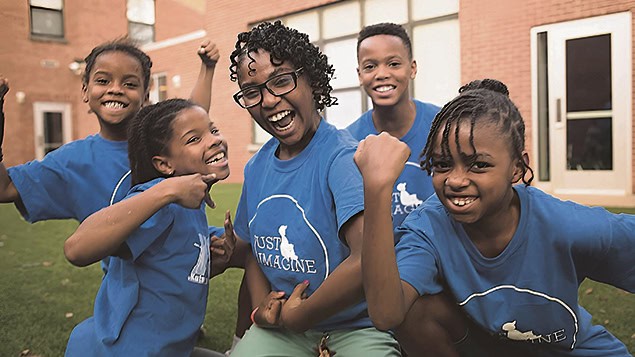
Just Imagine provides support for inner-city high school students.

“This fall in New York, we will hold our first gathering of all our grantees in Israel and the United States. It was supposed to be last November, but then October 7 happened. A very generous donor is underwriting most of the cost, because he knows, as I know, that bringing these people together, the energy and what they can learn from each other, will be priceless.”

The fund is also working on a program that will help grantees through the process of “creating a mature model of an operating nonprofit,” based on the assumption that visionaries don’t necessarily know many of the mundane details they — or someone else in the organization — will have to master to make sure that it runs smoothly, legally, and efficiently.

“We will share best practices, let everyone know that they are not alone, and know that whatever crisis they are going through, someone else is, too,” she said.

Among the many projects Good People has funded is one that identifies people who need help with expenses. The help it offers is both direct and anonymous. “That has allowed us to identify people who are smart but otherwise might not have been able to get higher education,” Ms. Eisenberger said.

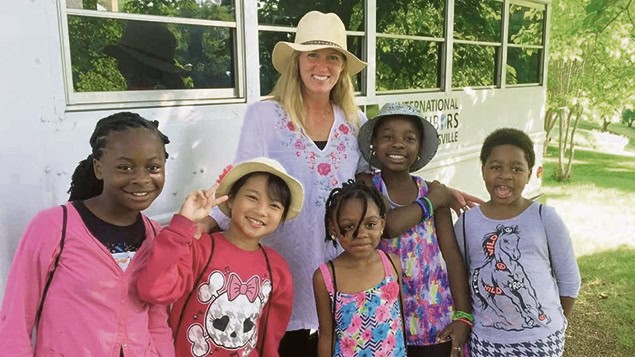
International Neighbors welcomes refugees and helps them settle into their new lives in Charlottesville.

For the last four years, a donor has put a young woman through law school.

“They don’t know each other,” she said. “I know both of them, but they don’t know each other. We are working through a third party.”

This is the Rambam’s philanthropic ideal. Most people can’t do it. “The donors do it at great personal expense,” Ms. Eisenberger said.

There’s a practical side to this. “I don’t want people knowing that we do this,” she continued. “The requests would be endless. Still, “What drives me more than anything else is kavod.” Honor. Knowing that she’s doing the right thing.

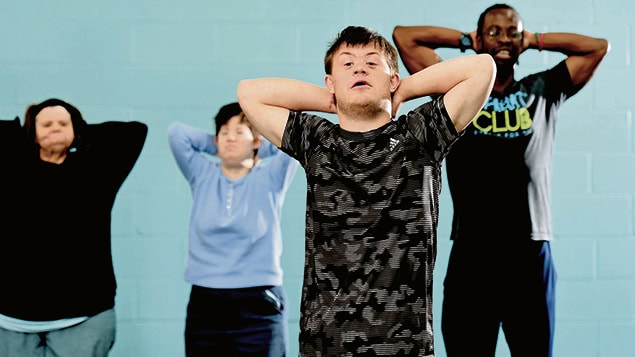
The SPIRIT Club Foundation gives disabled kids the chance to work out.

There is a tension to being unknown, though. It gets in the way of effective fundraising, and therefore limits the amount of good the fund can do. The Good People Fund has expanded. It now includes a marketing and communications consultant and a director of engagement, Julie Fisher, with whom Ms. Eisenberger is excited to work. Ms. Fisher’s husband, Dan Shapiro, was the U.S. ambassador to Israel, she ran her own small nonprofit, and the family lived in Israel for 12 years, amassing yet more connections. That’s a good thing.

“We are the best-kept secret, which is a problem,” Ms. Eisenberger said. “More money allows us to help more people. We have the capacity for a certain number of programs. Our work is very labor-intensive. You are not just writing a check; with every check comes phone calls and meetings. It’s not onerous — but mentoring is just so important.”

Ms. Eisenberger talked again about her motivations, particularly now, after October 7. “If I didn’t have this work right now, I don’t know what I would do with my anguish,” she said. Now, she’s “interacting with my grantees in Israel, trying to meet the challenge of running their organizations while having lost family or friends, and living in a horrific environment politically, socially, and economically. The workloads of our grantees in Israel has increased. Something like $1 billion in aid went to Israel, but none of it filtered down to the small programs we work with. They are dealing with significant problems. And the American Jewish donor community has some amount of donor fatigue.

“It’s true that many Jewish donors don’t give what they gave because they can’t, not because they don’t want to — but that doesn’t make it better.”

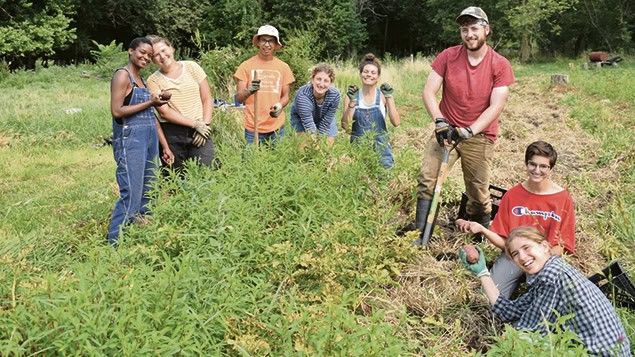
Zumwalt Acres is a “regenerative agricultural community” in Illinois.

Reva Judas of Teaneck, the founder and head of Nechama Comfort, the organization that supports women and families whose babies have died or have had stillbirths, gets some funding from Good People.

“Naomi is really unbelievable,” she said. “She is such a calming voice.”

When she wanted Nechama Comfort to grow, Ms. Judas’s father, Rabbi Sidney Green, who always was gifted at making good things happen, “was looking for ways to help me with funding,” she said. “He googled, and found Naomi, and we connected. We met a few weeks later, and it was so natural being with her. We talked for a long time. And she said, ‘You are a fit for what I do.’

“She puts herself into this work wholeheartedly,” Ms. Judas continued. “She doesn’t just write you a check. She really wants to teach you. She wants you to be part of the process. She makes herself available as a mentor and a sounding board.

Road to Recovery transports sick Palestinians – mostly children – to Israeli hospitals for treatment.

“And it’s give and take. Sometimes she’ll call me and ask me for advice.

“She is able to make anybody feel that they are the most important person in the world. She is available. When you call her, she just picks up the phone.

“She is absolutely for real,” Ms. Judas concluded.

Debra Orenstein is the rabbi of Congregation B’nai Israel in Emerson. “I love Naomi, and I love what she does,” Rabbi Orenstein said “I have invited her to my synagogue to speak to the Hebrew school. She is so relatable.

“When you talk about big problems in the world, it can be overwhelming. Massive amounts of money are needed. Her approach to tzedakah is targeted and personalized. It enables people to connect, and it also allows a few dollars to make a very big difference.

“It’s not as if we don’t need the bigger charities — we do — but this is not either/or. Naomi’s approach is really helpful both to the organizations that are running on a shoestring and the donors who can see how their money makes a difference.

Rabbi Orenstein has known Ms. Eisenberger for years, but they hadn’t been in touch until earlier this year, “when I read a beautiful email that she wrote about hope,” she said. “I was about to teach an online course about hope, so I called her to ask what if I were to teach it in partnership with the Good People Fund and raise money for her cause.

“The proposal was totally out of the blue. Everything was easy. There was no red tape. She just said, ‘Yes. Let’s do this.’

“What amazes me about Naomi is that she always has her finger on the pulse,” Rabbi Orenstein continued. That was true when she ran her small business from her home, decades ago, and it’s true now, too. “She knows where the community is, and what it needs. I was very involved with freeing slaves, and she was very involved in that, too. When I first spoke to her about #MeToo, she already was involved with #GamAni,” Me Too in Hebrew. “She knew people’s stories. She is so remarkably plugged in.”

It’s not clear how that works, Rabbi Orenstein said. “It’s not that she’s in any kind of boys’ club elite. She knows those people, but she’s not one of them. But somehow she knows Jewish organizational life, writ large, in all of its different incarnations — the big, the small, the medium.

“She knows people, she connects with people in such an authentic and deep way that people share with her, and she shares with them.

“She is easy to partner with. Her default answer to so much of life is yes. That is rare. Most people who are in the difficult but enviable position of being able to grant money see themselves as gatekeepers. They feel they have to say no. But Naomi — who is always totally responsible about where and to whom she gives money — is always game to meet someone new, to try something new.

“Her default is yes, and that is what makes her so delightful.”


Good People Fund and Naomi Eisenberger on the cover of the Jewish Standard magazineThis article first appeared as the cover story in The Jewish Standard, June 14, 2024 print edition and on their website.

  • Page 1
  • Page 2
  • Page 3
  • Interim pages omitted …
  • Page 9
  • Go to Next Page »

Primary Sidebar

Tzedakah Diaries

The Good People Fund is all about stories that share the goodness within each of us and the way that goodness can change the world, bit by bit. Read on and find out why we love our work, helping extraordinary people. . . .

  • When Our Good People Meet…

    February 13, 2026 10:45 am

  • A Year of Healing and Harvest at Ruca’s Farm

    February 13, 2026 10:40 am

  • Grantee in the News: Bagel Rescue

    February 13, 2026 10:33 am

  • Serving Up Soup—and Community—at Zumwalt Acres

    February 13, 2026 10:30 am

  • Snow Days are for ‘Konnection’

    February 13, 2026 10:23 am

Footer

Candid Gold Transparency Award Charity Navigator Four-Star Rating
Safety. Respect. Equity. — SRE Network Affiliate

Get Inspired

Get uplifting stories of how ordinary people are changing the world in extraordinary ways. Subscribe to our monthly newsletter.

Subscribe

Recent Updates

  • When Our Good People Meet…
  • A Year of Healing and Harvest at Ruca’s Farm
  • Facebook
  • Instagram
  • YouTube

Copyright © 2026 The Good People Fund, Inc. | All Right Reserved | Website by DoSiDo Design and Insight Dezign 26-1887249

Want more good news?

Sign up here for our newsletter!

Good News

Educators Newsletter

Join our Educators News list for updates on to receive updates on our programs and curricula:

  • This field is for validation purposes and should be left unchanged.
Get Inspired
Just add your name and email address and you are on the way to reading Good People’s stories that will inspire you!

"*" indicates required fields

This field is for validation purposes and should be left unchanged.
Name*
The Good People FundLogo Header Menu
  • About
    • Mission and Vision
    • Values
    • Plan for Good (Our Strategic Plan)
    • Our Story
    • Professional Leadership
    • Board of Trustees
    • Financial Information
    • Privacy Policy
    • FAQ’s
    • Contact Us
  • Our Grantees
    • New Grantees
    • By Program Focus
    • By Location
    • By Organization
    • Alumni Grantees
  • How to Help
    • Donate Now
    • Acknowledgement Cards
    • Planned Giving
    • Charitable Solicitation Disclosure Statement
  • Learning
    • Our Educational Philosophy
    • For Jewish Educators
      • Our Good Service Model
      • Grab ‘n’ Go Lessons
      • GPF Core Curriculum
      • B’nai Mitzvah Service Projects
      • Archival Materials
      • Ziv Tzedakah Curriculum
    • For Students
      • Tips for Good Service Projects
      • Other Resources
  • Media
    • Newsroom
      • Grantees in the News
      • GPF in the News
      • Press Releases
      • 10th Anniversary
    • Grantee Focus
    • Videos
  • Good News
    • Good News Stories
    • Executive Director Messages
  • Podcasts
  • Journal of Good
    • Journal of Good
    • Stories of Hope
    • Journal of Good – Prior Years