• Skip to primary navigation
  • Skip to main content
  • Skip to primary sidebar
  • Skip to footer
 
LOG-IN
DONATE NOW
SUBSCRIBE
The Good People Fund

The Good People Fund

  • About
    • Mission and Vision
    • Values
    • Plan for Good (Our Strategic Plan)
    • Our Story
    • Professional Leadership
    • Board of Trustees
    • Financial Information
    • Privacy Policy
    • FAQ’s
    • Contact Us
  • Our Grantees
    • New Grantees
    • By Program Focus
    • By Location
    • By Organization
    • Alumni Grantees
  • How to Help
    • Donate Now
    • Acknowledgement Cards
    • Planned Giving
    • Charitable Solicitation Disclosure Statement
  • Learning
    • Our Educational Philosophy
    • For Jewish Educators
      • Our Good Service Model
      • Grab ‘n’ Go Lessons
      • GPF Core Curriculum
      • B’nai Mitzvah Service Projects
      • Archival Materials
      • Ziv Tzedakah Curriculum
    • For Students
      • Tips for Good Service Projects
      • Other Resources
  • Media
    • Newsroom
      • Grantees in the News
      • GPF in the News
      • Press Releases
    • Grantee Focus
    • Videos
  • Good News
    • Good News Stories
    • Executive Director Messages
    • 18th Anniversary Celebration
  • Podcasts
  • Journal of Good
    • Journal of Good
    • Stories of Hope
    • Journal of Good – Prior Years
You are here: Home / Archives for News

A 14-Year-Old Bride, Wed to Her Rapist, Playing on a Jungle Gym

For years, the United States has campaigned against child marriage around the world, from Guatemala to Zimbabwe. But we should listen to ourselves: Forty-five states here in America continue to allow girls and boys under 18 to wed.

Girls as young as 10 are occasionally married quite legally in the United States. Nine states have established no absolute minimum age for marriage.

A study this year found that nearly 300,000 children — meaning age 17 and under — were married in the United States from 2000 to 2018. An overwhelming majority were 16- or 17- year-old girls, on average marrying a man four years older. But more than 1,000 were 14 or younger, and five were only 10 years old. Some were wed to people far older.

“No one asked me for consent,” remembered Patricia Abatemarco, who as an eighth grader was married just after her 14th birthday to a man who was 27. “There was nothing romantic about it. I wasn’t in love with him. I didn’t have a crush on him. I was afraid of him.”

A judge in Florence, Ala., married the couple in the courthouse, and then the couple went to the park outside — where the new bride spotted a playground and left the groom to play on the jungle gym.

Abatemarco, now 55, said the path to this marriage began when she was 12 and living in a middle-class home. Her parents were secular, but she had become quite religious and during a personal crisis sought help from an evangelical Christian telephone hotline. A counselor, Mark, showed up and offered free counseling services; these became increasingly intense, she said, and he began to forcibly rape her repeatedly.

At 13, she became pregnant by these rapes. She didn’t know what to do, but Mark and her mother favored marriage. This solved their problems: For Abatemarco’s mother, it averted the stigma of an out-of-wedlock baby in the house, and for Mark, it allowed him to dodge rape charges. Abatemarco desperately wanted to keep the baby, in hopes of having someone to love and comfort her, and her mom told her this was the only way she could do so.

While this happened decades ago, similar reasoning leads to many youthful marriages today.

I’ve been writing about child marriages in the United States since 2017, when I came across the case of an 11-year-old girl, Sherry Johnson, who had been forced to marry her rapist in Florida. Child marriage was then allowed in some form in all 50 states.

Now, thanks in part to heroic work by an advocacy organization, Unchained at Last, five states have completely barred marriages by people under 18: Delaware, Minnesota, New Jersey, Pennsylvania and (just this month) Rhode Island. New York has passed a similar bill that is awaiting the governor’s signature.

The states that allow child marriages mostly do so in particular circumstances, such as with the permission of a parent and a judge. These safeguards don’t work very well. The marriages sometimes involve a girl, perhaps pregnant, marrying an older man who may be her rapist.

The new study found that 60,000 of the child marriages since 2000 involved couples with a large enough gap in ages that sex would typically be a crime. “The marriage license became a get-out-of-jail-free card in most of those states,” said Fraidy Reiss, a victim of forced marriage who founded Unchained at Last.

There are, of course, 17-year-olds who fall deeply in love and can handle a marriage. We can understand that if a girl becomes pregnant, the couple may prefer to marry right away. But it’s complicated: The legal system withholds many rights from people under 18, so a married 17-year-old can become trapped in a Kafkaesque nightmare.

If the marriage sours, an underage girl will often not be accepted at a women’s shelter. She will have difficulty retaining a lawyer to get assistance. Astonishingly, she may even have trouble getting divorced, because children often cannot initiate a legal proceeding without going through a guardian. And if a minor flees a violent husband, the police may send her right back to her abuser.

That’s what happened to Abatemarco.

Her marriage at 14 didn’t work. Within months, Abatemarco said, Mark began beating her almost daily and sometimes the new baby as well. (Mark died in 2008, so I don’t know his version of events.)

One night, she said, she fled a beating and was walking on the road about midnight with her baby in a stroller. A police officer stopped her for violating curfew, drove her and the baby back home, gave a copy of the written warning to her husband and then drove off.

“My husband then beat me,” Abatemarco said.

Eventually, Abatemarco fled for good and put her baby daughter up for adoption. With the help of her parents, she was able to get a divorce — on a school day, with enough time to catch her 11th-grade English class.

The United States is quite right to campaign to end child marriage in Bangladesh and Yemen. Let’s do the same at home.
Special-needs adults find meaningful work on kibbutz farm

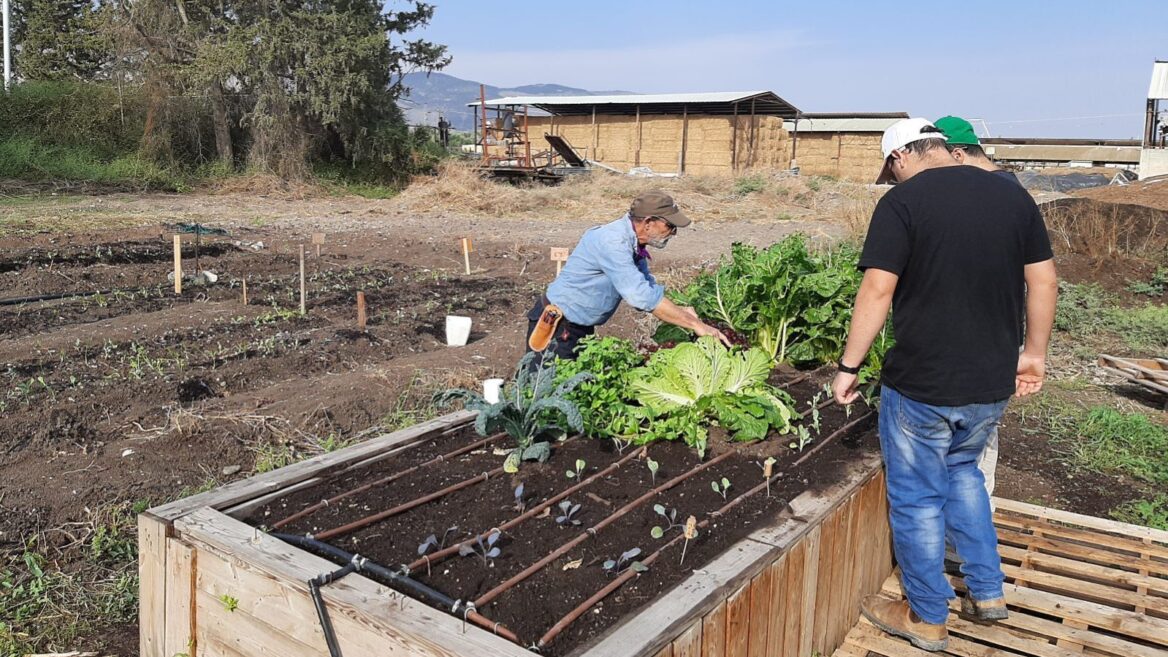
Moringa and turmeric aren’t well-known crops in Israel. But when the ones being cultivated at Kibbutz Shluchot in the north of the country reach the market, you can rest assured that they grew in the most supportive and caring atmosphere.

For the past nine months, they’ve been grown by adults with special needs as part of their work at an NGO called Shai Asher that provides them with a meaningful employment experience, constituting a stepping stone toward a more independent and integrated life.

In Israel, people with special needs go to school until the age of 21, after which those who can begin working. The problem is that many graduates don’t find employment or struggle in inappropriate jobs.

“In Israel, 75 percent of people with special needs are unemployed, and then you have to look into what kind of employment the other 25 percent has,” explains Menachem Stolpner, founder and director of Shai Asher.

Born in the United States, social worker Stolpnerimmigrated to Israel with his family in 1996, settling in Shluchot, a member of the religious kibbutz movement.

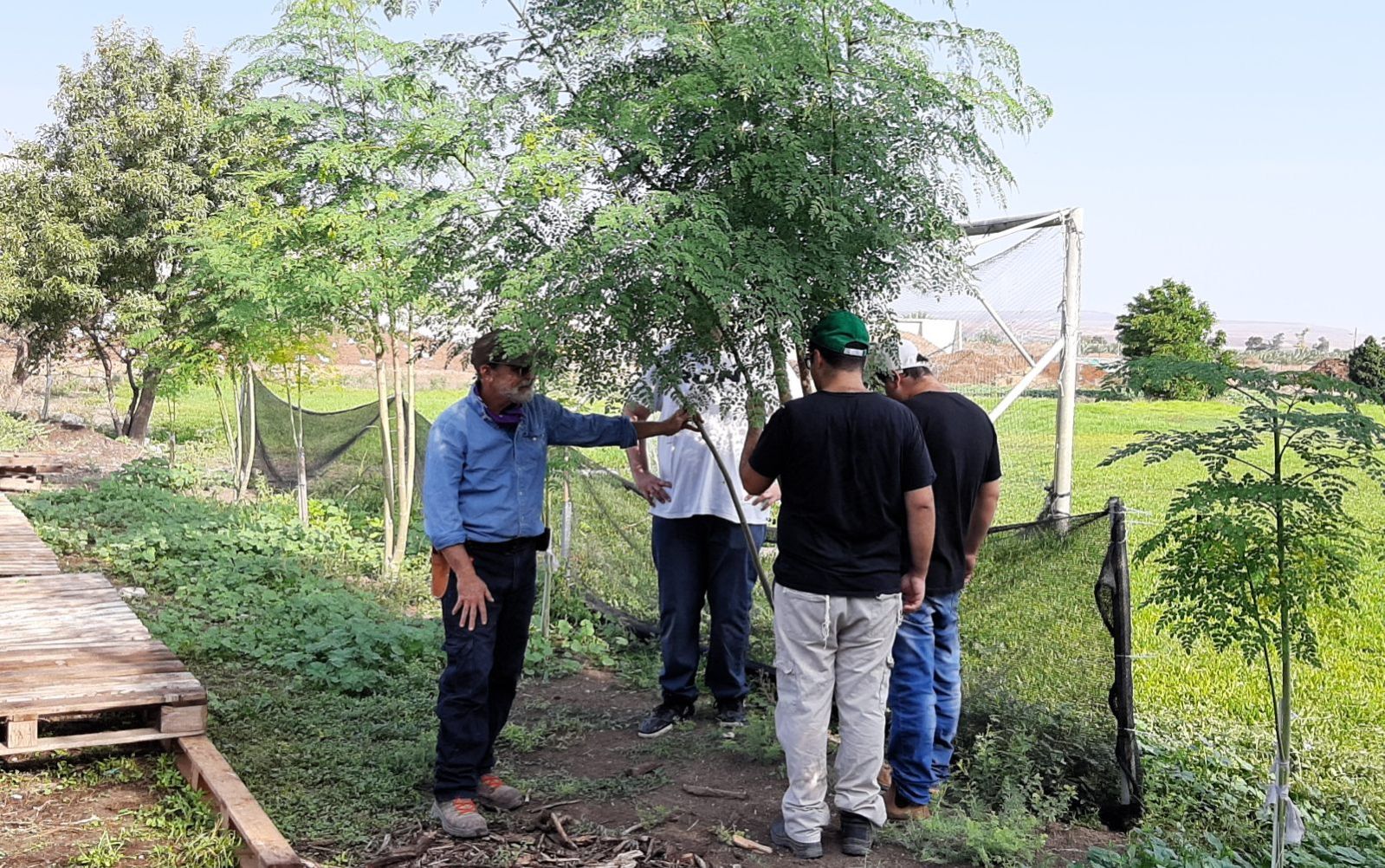
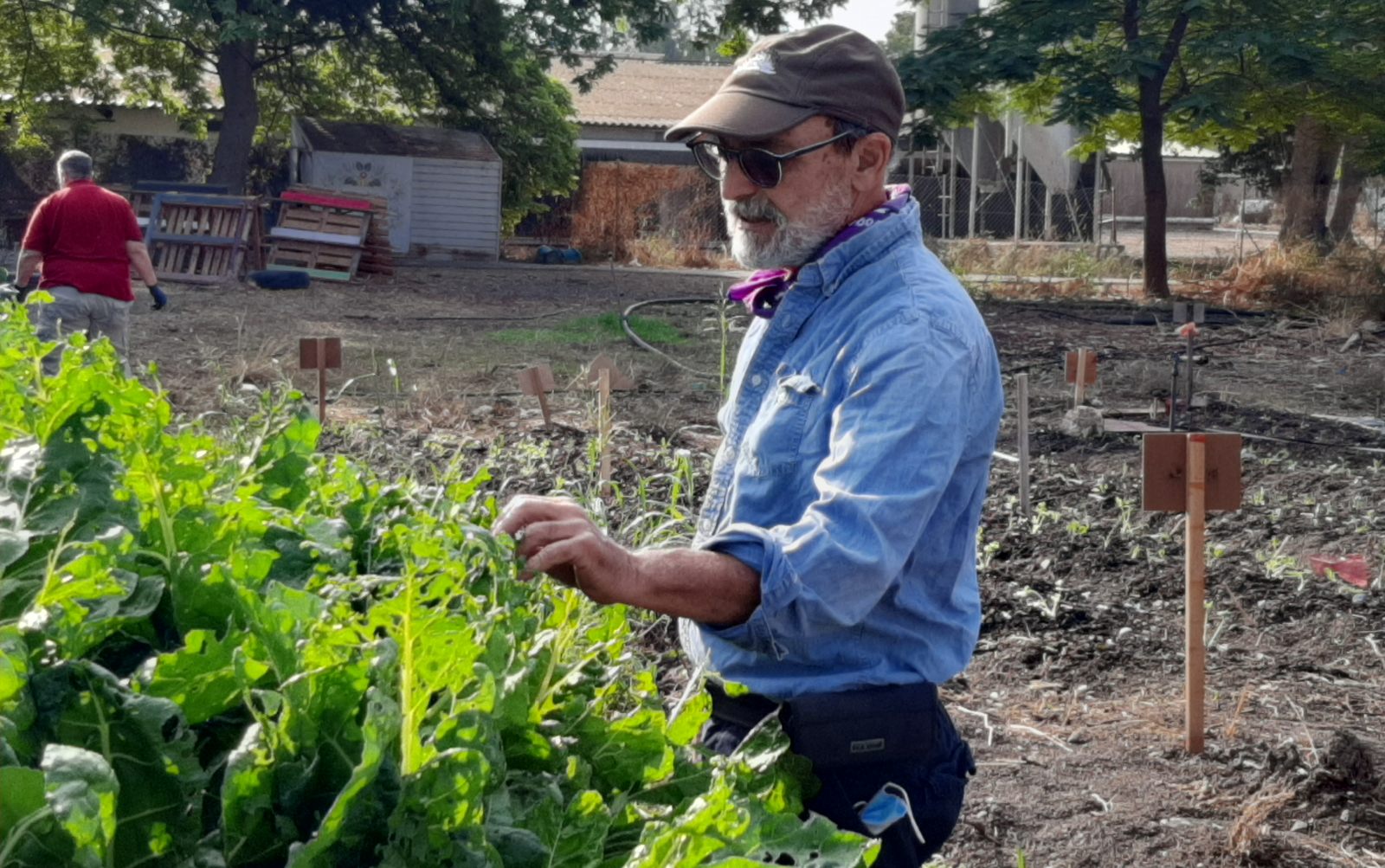
Social worker Menachem Stolpner inspects the crops at Kibbutz Shluchot in the north of Israel. Photo courtesy of Shai Asher

“My motto is to try and find meaningful work experience for people with special needs,” he says. “I decided to create a therapeutic work environment. It’s a job; they get paid. They come in every day to a therapeutic setting that is a balance between teaching and having them become more independent but knowing there’s a safety net,” he explains.

There are currently eight people gardening at Shai Asher, some of whom have mental illness, some who are on the autism spectrum and others classified with developmental disabilities. The NGO has amassed around 60 alumni, some of whom have continued on to find employment elsewhere.

“The goal is that they can say to me,‘Menachem, I’m ready and I want a job outside,” Stolpner explains. “I try to help them help themselves become workers who, when they go for a job, the employer will say ‘Hey, this is a guy who can work.’”

All the little things

Stolpner works with the program’s participants on group interaction, following instructions, positive relations, coming in on time and making sure they get enough sleep the night before work.

“All those little things that you take for granted they have to learn, to be shown, take into themselves,” he says.

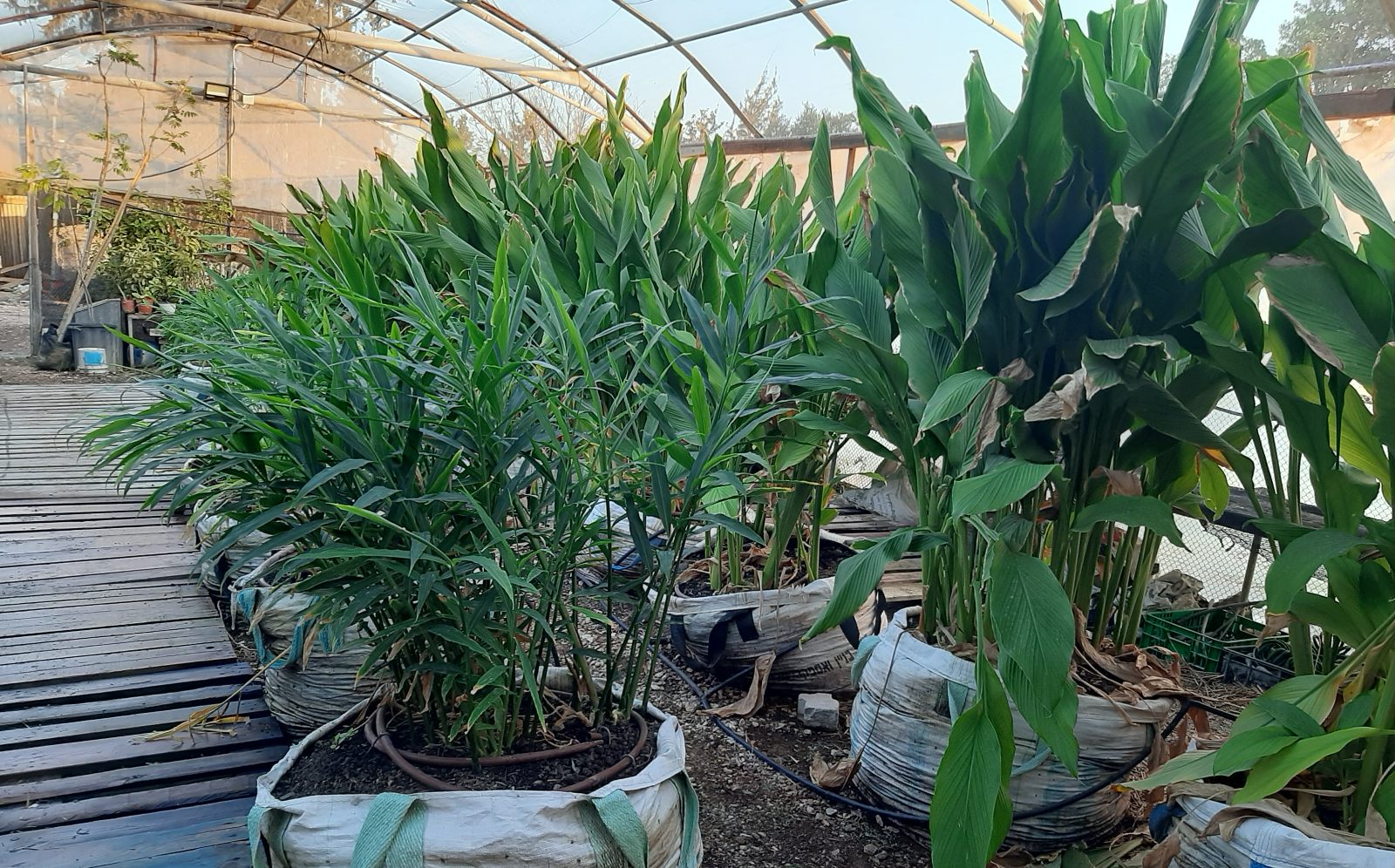
Turmeric plants prosper in the therapeutic setting at Shai Asher’s gardening program. Photo: courtesy Shai Asher

The NGO was founded eight years ago in memory of Stolpner’sfriend Milton (Asher) Marks III. It started out with a therapeutic petting zoo on the kibbutz before switching over to gardening.

The turmeric and moringa are new additions.

“We have a plant nursery and a building that we’ve created attached to it so we work inside, and we also have a vegetable garden,” Stolpner says. “Over the past year or so we started to concentrate on specific plants to grow in the hope that those things will be marketable.”

Turmeric and moringa, he says, were chosen for several reasons.

“They were things that we could learn about their growth because it takes a long time to grow and a process. In addition to that, they’re very healthful.And they’re not that commonly known here in Israel; people don’t know the uses and benefits,” he notes.

Turmeric growing at Kibbutz Shluhot. Photo courtesy of Shai Asher

Turmeric, the better-known of the two, is a plant whose rootstalk can be used either fresh or boiled in water, dried and ground into a yellow powder. Aside from being the base for curries, turmeric is also used in traditional medicine for its antioxidant and anti-inflammatory properties.

Moringa is a plant whose leaves and seed pods are used in traditional medicine for their anti-inflammatory, antibacterial and anti-fungal properties. It is also consumed in powder form.

Menachem Stolpner and program participants tend to a moringa tree. Photo courtesy Shai Asher

Except for the first lockdown last spring, Stolpner and his fellow gardeners have been hard at work throughout the coronavirus crisis. This is possible because the work is done outside, in line with regulations.

Stolpneris even looking ahead. He was joined this year by a full-time volunteer, a local retiree, but otherwise remains the NGO’s sole employee.

“Oh, we have a lot of future plans,” he says.

“There are a number of things that we need in order to work more efficiently and better,” he adds. “We’re building a deck as a first step and putting up a pergola.”

As for Shai Asher’s exotic new crops, now is only the beginning.

“We’re just starting out; the turmeric won’t be ready for another month for harvest,” Stolpner says. “In the meantime, we’re growing and harvesting and processing and God willing we’ll be able to market.”

Great.com Talks With The Good People Fund

Good People Fund Exec Dir Naomi Eisenberger is the featured guest on the podcast of Great.com, a Swedish organization bringing attention to change makers around the world. In this 30-min interview, Naomi speaks about GPF’s mission, impact, and unique place on the philanthropic spectrum, and how GPF is championing and supporting under-the-radar visionaries so they can expand their influence and repair the world.

Courtney Smith founded Detroit Phoenix Center to help young people experiencing homelessness

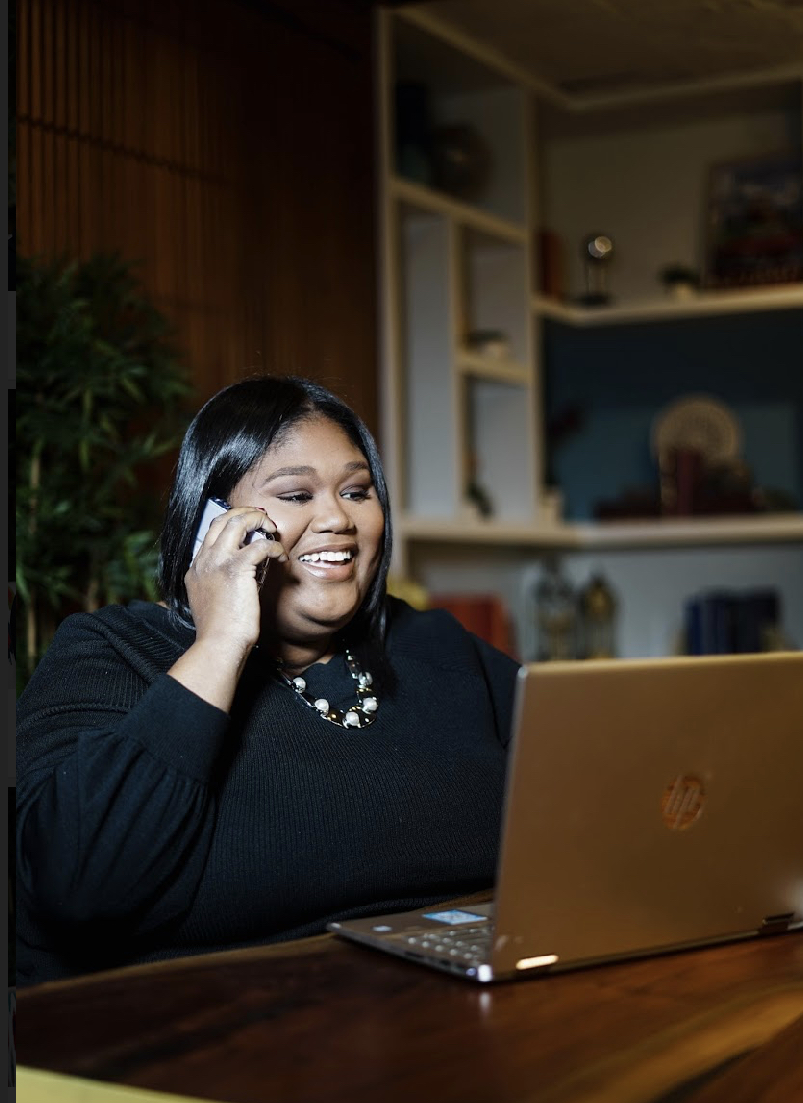
Courtney Smith is leading a life of service, helping youth who are experiencing homelessness in Detroit with her nonprofit organization, the Detroit Phoenix Center. She is the founder and CEO of the center which opened in 2017 and is the youngest CEO of a homeless youth service provider in the city and the only woman of color.

Smith, 29, knows what it’s like to experience homelessness at a young age. A Detroit native, she was in the foster care system as a baby until she was adopted at three years old. Throughout the years, family conflict and challenges arose at home, forcing her to go into a shelter for teens at the age of 15.

From then through her early 20’s, she was in and out of different shelters and staying with family members and friends. As an undergraduate honor student at Eastern Michigan University who nevertheless continued to struggle with homelessness, Smith realized that it was a systemic issue that needed to be addressed.

According to Michigan League for Public Policy, “One in 30 unaccompanied youth ages 12-17 will experience homelessness in a given year. This number jumps to one in 10 from age 18-24. Youth who are in or aging out of foster care, involved in the juvenile justice system, identify as LGBTQ, or are Black or part of the Latinx community are also more likely to experience one or more instances of homelessness between the ages of 12 and 24.”

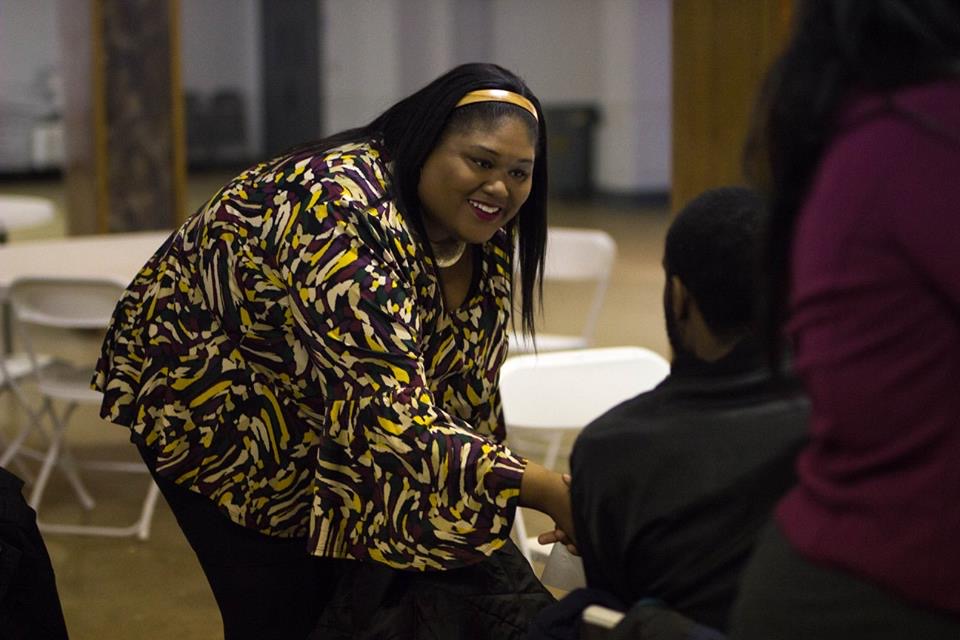
Courtesy of Courtney Smith

From 2013-2016, Smith worked at the National Association for the Education of Homeless Children and Youth as the Michigan youth task force coordinator, responsible for bringing service providers and youth together to find solutions to end homelessness in their communities. Smith left Detroit in 2015 (still working remotely for NAEHCY) and headed to Kentucky to do a year at AmeriCorps, where she worked at a community center serving immigrants and refugees.

In 2016, Smith returned to her hometown to help her family and youngest brother, Blair. While trying to help Blair and his friends secure housing and resources, she asked herself, ‘Where do people like my brother, who may not identify themselves as someone who is experiencing homelessness, go?’

That same year, she submitted a proposal to join the Millennial Trains Project to help find solutions to the issue of youth experiencing homelessness. The organization provided Smith and 25 social service entrepreneurs training, resources, and the opportunity to travel to six different communities and learn from CEOs of non-profit organizations. Smith was one of the five social service entrepreneurs who received a $10K grant.

During the trip, she met a 16-year-old girl who shared her experiences and told Smith how helpful drop-in centers were. She loved the idea.

“She said the best way that you can thank me is to go back to your own community and do something,” Smith said in an interview with theGrio.“This 16-year-old-girl really challenged me to put my money where my mouth was, and I didn’t have [any] money, so I was really moved by that.”

She continues, “It just so happened that I got on the train in the year that the last stop, for the first time that they’ve ever done this, the train was actually going to be in my city. So I convened a group of youth in Detroit and a group of stakeholders, and I talked to them about this model of a drop-in center and we built out what is known today as the Detroit Phoenix Center.”

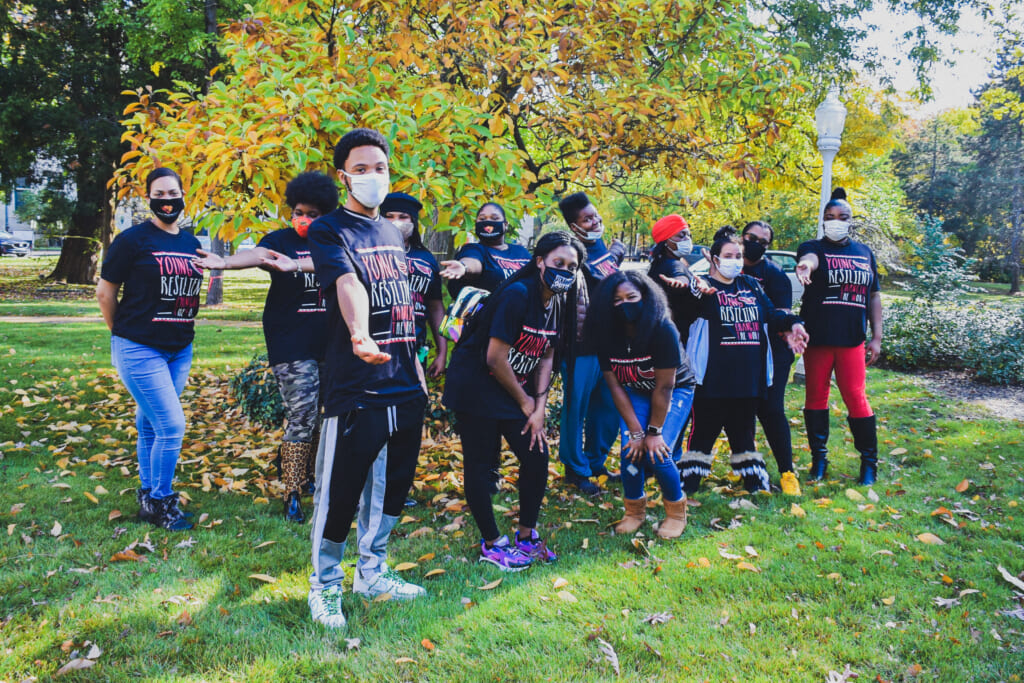
Courtesy of Courtney Smith

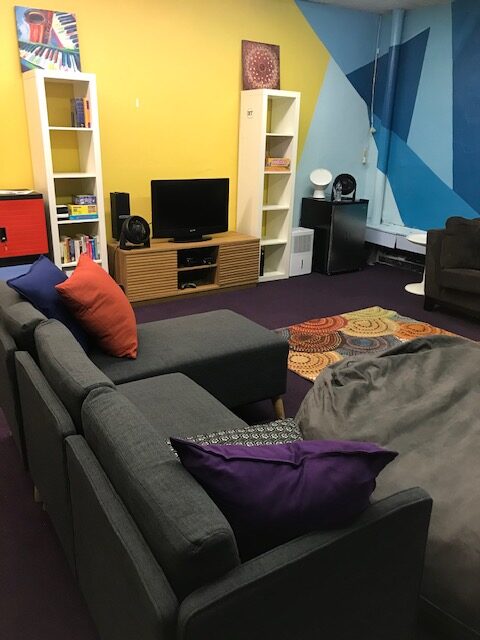
Detroit Phoenix Center opened in January 2017. It is a low barrier resource center where young people can drop in off the street. They can shower, wash clothes, get emergency assistance, food, and access to mental health resources. If they need housing that night, the organization connects them with housing. They also have an after-school enrichment program along with life skills and educational courses.

“So we don’t just focus on basic needs,” Smith explains.”We also focus on career readiness, life skills, educational workshops. We also have a youth action board. The Youth Action Board is comprised of a group of youth who were with us when we first started to make sure that our work is youth-centric.”

Courtesy of Courtney Smith

Young people serviced by the program can apply for a 12-month fellowship to learn about nonprofit leadership, nonprofit management, and advocacy.

“We believe that those who are closest to the problem need to be the ones driving the solutions,” Smith says. “So we want to empower the youth that we serve to be change agents in the community and also to hold us accountable as an agency to make sure that we don’t get too far removed from the heart of the matter. “

Like many organizations and businesses impacted by COVID-19, Detroit Phoenix Center has had to make some changes. The building the center was leasing closed so they’ve transitioned to virtual and mobile services. Throughout the pandemic, the center’s youth fellows have remained involved by helping register voters and providing legwork for supply giveaways and more.

Courtesy of Courtney Smith

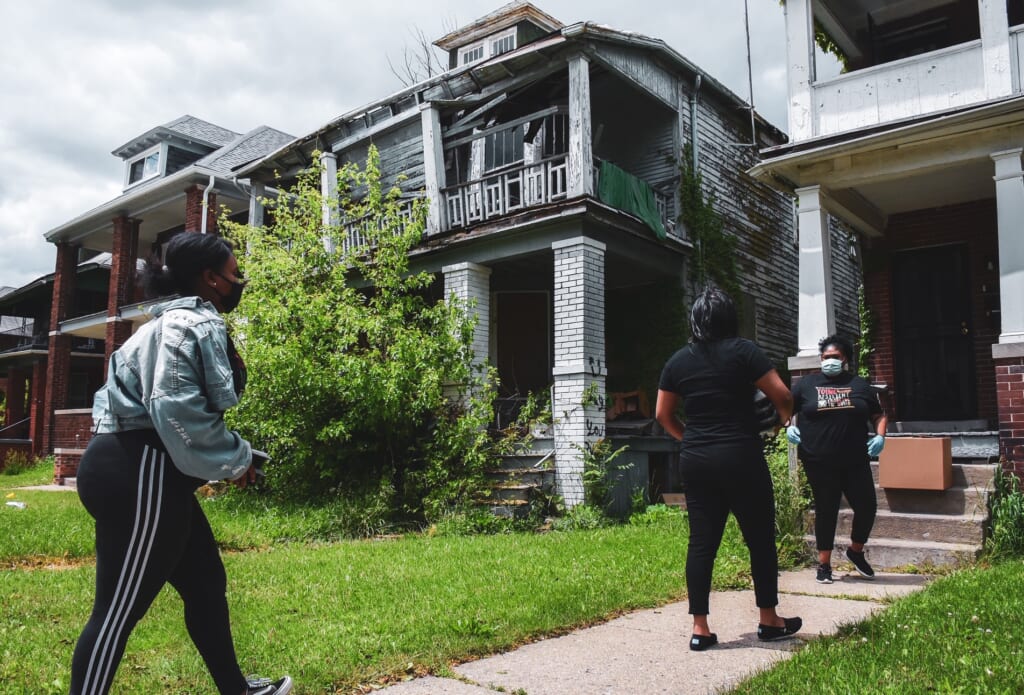
“We had to go out and literally find the youth,” Smith shares. “We had to go to hotels. We had to go to the abandoned houses. We had to go to the last known address and thankfully, we haven’t lost any of our young people, but it definitely changed the scope of what we do.”

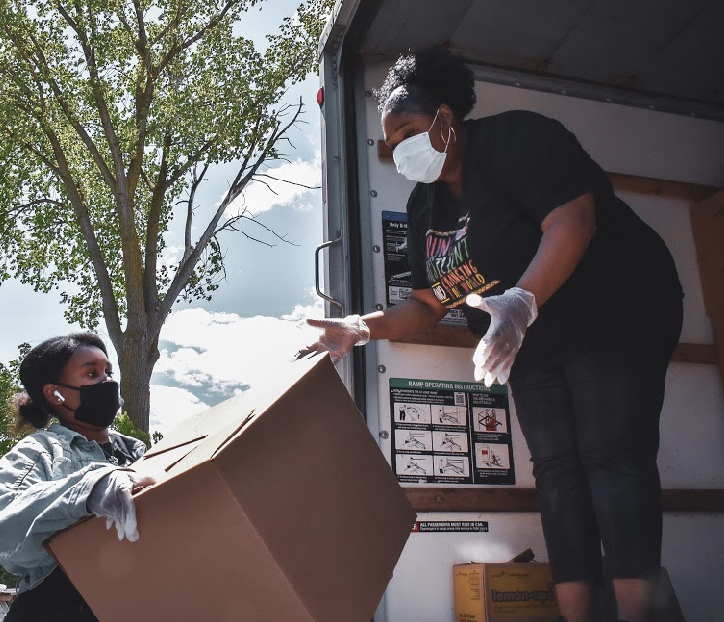
Smith and her team have delivered care packages, clothing, paid security deposits and outstanding rent and provided hotel vouchers for emergency housing.

“We did mental health workshops,” continues Smith.”We paid cell phone bills. We delivered laptop computers and routers. We literally provided wraparound support during this time. We’ve been able to serve more youth in the community because, again, transportation was a barrier. But since we have literally been taking our services to the young people, they’ve been reaching out through word of mouth.”

On Nov, 30, the Detroit Phoenix Center is launching a social media challenge for their December fundraising campaign One Night Without a Bed.

“It’s a call-to-action,” says Smith. “We want people to give up their bed for one night in December for the 4.2 million young people who experience homelessness on any given night. ‘We’re kicking it off on Nov. 30th, which is the last day of National Homeless Youth Awareness Month.”

Though youth homelessness is often talked about as a separate issue, Smith believes you can’t talk about youth homelessness without talking about poverty, educational disparities, and health outcomes.

“We have to really look at youth homelessness in relation to other systems…like the juvenile justice system,” she explains. “And the only way that we can truly, truly break the cycle of youth homelessness in our community is if all those systems work together to really move the needle. And also, to really, truly elevate the voices in the lived experiences of young people in the community and those who have actually experienced homelessness and center their voices and center their experiences in our solutions.”

Courtesy of Courtney Smith

Smith shared her advice to those who are interested in creating more Black-owned nonprofit organizations that are helping young people in need. “I would definitely tell them that we are uniquely positioned to really create the change in the community that we want.”

“No one is more qualified than we are,” Smith continues. “And you deserve to be at the table. And if you don’t have a seat at the table, then you need to open up a window to build your own table. Do what you need to do to bring your passion to fruition. One thing that I always remember, even in moments where I’m doubting myself, is that someone else’s life…someone else’s freedom, someone else’s joy is attached to my purpose, and that is a big calling, that is a deep calling.”

Courtesy of Courtney Smith

On the opening day of the Detroit Phoenix Center, Smith learned her youngest brother, Blair Smith, transitioned by suicide at the age of 19. Her brother’s life and his legacy are embedded in the very mission of the Detroit Phoenix Center and she has started a scholarship fund in his honor. 


We ARE the Leaders We Need Right Now

“Where are the Jewish leaders who speak for women?”

Dr. Susannah Heschel asks this critical question in her July 27th opinion piece in the Forward. She celebrates Rep. Alexandria Ocasio-Cortez’s recent speech on the House floor condemning Rep. Ted Yoho’s demeaning and insulting language and behavior which, unfortunately, is not unusual for women – especially women of color – to experience.

Heschel accurately addresses the ever-present and pervasive marginalization, inequity and, often, harassment that many – if not most – women experience in the Jewish communal world. In particular, she focuses on the professional Jewish landscape.

Rep. Ocasio-Cortez was speaking for Jewish women because she was sharing an experience to which all women can relate. Her experience as a woman is not “other” than Jewish women, it is inclusive of all of us.

While Heschel poses a critical question and shines light yet again on the very issues that have been fueled by the #MeToo moment, we believe that she, in fact, makes her own point.

“Where are the Jewish leaders who speak for women?” We are right here!

We are working tirelessly every day individually and collectively across our community to speak and advocate for Jewish (and all) women, to shine a light on Jewish women’s work and leadership. We are curating forums, events, and now, webinars, working to end inequity, harassment, assault and abuse. We are speaking and teaching, gathering and organizing, hosting (currently virtual) events, planning and strategizing.

We stand today as a diverse coalition, representing Jewish women from all across the country and the globe, from all walks of life, identities, and religious affiliations: Reform, Orthodox, Conservative, Reconstructionist, Renewal and otherwise affiliated or not; we are Ashkenazi, Sephardi, Mizrachi; we are Black, Indigenous, Latinx, Asian, White, and Multiracial; we are LGBTQ+ and straight; we are philanthropists, CEOs, educators, journalists, volunteers, stay-at-home parents, and more.

And today, as a global pandemic swirls around us, we continue to keep that fight alive even while issues deemed more urgent understandably rise to the top.

Last August, an article titled “The Week That All Jewish Women Turned Invisible” appeared on this website. It was a response to a week where once again, many new male CEOs were announced at legacy institutions, multiple articles were published celebrating male-only leadership, and panels featuring exclusively male-only leadership were convened.

An effort began on a highly active Facebook Group, “Year of the Jewish Woman and Allies” – now home to 3,261 members, and heavily populated with heads of organizations and public speakers and writers who speak out for women every day, and who are in collegial dialogue there – to grow a movement that speaks loudly and powerfully on behalf of Jewish women.

We thank Professor Heschel for shining a light, again, as we seemingly continue to need to, on the egregious inequities and abuses of women in the Jewish community. Doing so as a public figure whose name garners much respect and reverence only helps our cause.

However, we pose a question in return. If someone with her extraordinary background, education, awareness and engagement in the Jewish community is asking: “Where are the Jewish leaders who speak for women?” then how can we expect those who are less informed to support and join this effort? Whose responsibility is it to know who our female Jewish leaders are and raise up our voices and our work? If we do not take an active role in educating ourselves as well as promoting the work of Jewish women’s leadership every day – then how can we rightfully express frustration and anger when others’ voices are not “loud enough” and remain unheard?

“Where are the Jewish leaders who speak for women?” WE ARE RIGHT HERE.

But we ask different questions: Where are the Jewish leaders actively seeking out the organizations, initiatives, and women themselves whose voices deserve amplification? Where are the Jewish leaders actively choosing to fund our work? Where are the Jewish leaders with influence and power who are saying “Look here, these bold Jewish women leaders are valiant and persistent in their struggle for justice, for equity, for safety, and for respect. Let’s join them.”

We are here. We don’t need to be found or for others to speak on our behalf. What we need is the Jewish organizational world to see us as leaders and position us at the heads of our largest tables.

People of stature and influence in the Jewish community: You are part of this work. Make it your business to elevate and amplify Jewish women’s voices, follow our work, use your own voice to give the work greater visibility and credibility. So many women (and men) have stepped up to challenge gender and other inequities, and have spoken as eloquently and forcefully as AOC. Support us, engage with us, listen to our stories.

Nicole Nevarez is National Director of Ta’amod: Stand Up!; Jamie Allen Black is CEO of the Jewish Women’s Foundation of New York; Naomi Eisenberger is Executive Director and Co-Founder of The Good People Fund.

Co-signers: (organizations listed for identification purposes only):

  • Ruth Messinger / Jewish Social Justice Consultant
  • Barbara Dobkin / Dobkin Family Foundation
  • Meredith Jacobs, CEO / Jewish Women International (JWI)
  • Sara Shapiro-Plevan, Co-Founder / Gender Equity in Hiring Project; Founder and Lead Consultant / Rimonim Consulting
  • Sally Gottesman
  • Rachel Weinstein, President / Jewish Women’s Foundation of New York
  • Shahanna McKinney Baldon
  • Dr. Judith Rosenbaum, CEO / Jewish Women’s Archive
  • Eve Landau
  • Ginna Green, Strategist and Consultant
  • Tania Laden, Executive Director / LivelyHoods
  • H. Glenn Rosenkrantz
  • Sarah Chandler, CEO / Shamir Collective
  • Rabba Melissa Scholten-Gutierrez
  • Hazzan Joanna Selznick Dulkin
  • Rabbi Rebecca W. Sirbu, Co-Founder / Gender Equity in Hiring Project; CEO / RabbiCareers.com; Engagement Division Director / Hadassah
  • Rabbi Steven Bayar, Emeritus / Bnai Israel, Millburn, NJ / Director JSurge
  • Naama Haviv, Director of Community Engagement / MAZON: A Jewish Response to Hunger
  • Ann Cohen / Ann Cohen & Associates
  • Susan Weidman Schneider, Editor in Chief / Lilith Magazine
  • Samantha Anderson, Founder & Managing Partner / Ceres Group Advisors
  • Jordan Namerow, Founder and Principal / Jordan Namerow Communications
  • Rachel Gildiner, Executive Director / GatherDC
  • Dana Levinson Steiner, Board of Directors / Jewish Women’s Foundation of New York
  • Amanda Katz, Executive Director/JCADA
  • Rebecca Youngerman, Founder and Principal / RGY Consulting
  • Jodi Bromberg, CEO / 18Doors (formerly InterfaithFamily)
  • Deborah Meyer, CEO / Moving Traditions
  • Naomi Tucker, Executive Director / SHALOM BAYIT, Ending Domestic Violence in Jewish Homes
  • Larisa Klebe, Director / Nishmah: The St. Louis Jewish Women’s Project (a program of the J)
  • Dan Brown, Founder and Publisher / eJewishPhilanthropy
  • Rabbi Dena Klein / The Jewish Education Project
  • Laura Mandel, Executive Director / The Jewish Arts Collaborative
  • Rabbi Yael Ridberg / Congregation Dor Hadash
  • Rachel Eisen, Co-Founder / Mentoring for Equity
  • Sara Miller-Paul, Co-Founder / Mentoring for Equity
  • Rabbi Andrea M. Gouze, Temple Beth Emunah / Director of Pastoral Care, New England Sinai Hospital
  • Cindy Rowe, Executive Director / Jewish Alliance for Law and Social Action
  • Susan Adler, Executive Director / Boston Jewish Film
  • Idit Klein, President & CEO / Keshet
  • Stephanie Levin, Chief Engagement & Innovation Officer / Peninsula JCC
  • Karyn Grossman Gershon, Executive Director / Project Kesher
  • Allison Fine
  • Dana Sheanin, CEO / JewishLearningWorks
  • Rabbi Rachel Ain
  • Rabbi Danya Ruttenberg
  • Jacqueline Ulin Levey, CEO / WashU Hillel
  • Carrie Bornstein, Executive Director / Mayyim Hayyim Living Waters Community Mikveh and Paula Brody & Family Education Center
  • Rachel Wasserman
  • Daphne Lazar Price, Executive Director / Jewish Orthodox Feminist Alliance
  • Rabbi Sharon Cohen Anisfeld, President / Hebrew College
  • Laura Hyman, Director / Genesis Pre-college Program at Brandeis University
  • Rivka Cohen, Director of Partnerships and Strategic Development / Lissan
  • Molly Wernick, Community Director/Habonim Dror Camp Galil
  • Rabbi Melinda Zalma / Commander, Navy Chaplain Corps / Program Director, Jewish Community Relations Council-NY
  • Rabbi Lisa Gelber
  • Susan Weiss, Executive Director / Center for Women’s Justice
  • Liz Wolfson
  • Micol Zimmerman Burkeman / Hebrew Union College – Jewish Institute of Religion
  • Libby Goldstein Parker, Executive Director / Jewfolk, Inc.
  • Susan Holzman Wachsstock, The Jewish Education Project
  • Sarah Waldbott, Director of Development/ National Council of Jewish Women New York
  • Naomi Less, Founding Ritual Leader and Associate Director, Lab/Shul
  • Sara Atkins

Addressing Sexual Harassment in the Jewish Workplace

The #Me Too movement is coming to the Atlanta Jewish community. The Jewish Women’s Fund of Atlanta is hosting a Change the Culture Summit Feb. 24 to address sexual harassment, sexism and gender discrimination in Jewish workplaces and communal spaces. The half-day program will address issues of safety, respect and equity and is designed for professionals, board members, lay leaders, donors and general community members.

Or perhaps the #MeToo movement is already here. As part of its Change the Culture Initiative, JWFA is seeking anonymous personal stories of discrimination, harassment and assault in Jewish workplaces.

According to Rachel Wasserman, executive director of JWFA, several such accounts have already been received, from both women and men. “We plan to incorporate these stories into the summit,” she said, stressing that she receives the anonymous reports directly from Google. “People are afraid that their stories can be traced,” she acknowledged.

The summit, to be held at The Selig Center, will kick off by sharing national research that shows the issue of sexual harassment in the workplace is not limited to the non-Jewish world. “The numbers speak for themselves,” Wasserman said.

Guila Benchimol is senior advisor to the Safety, Respect, Equity Jewish coalition.

The research was conducted by Guila Benchimol, who is senior advisor to the Safety, Respect, Equity Jewish coalition that addresses sexual harassment and gender discrimination. She is also a research associate at the Centre for the Study of Social and Legal Responses to Violence.

Another national expert that JWFA is bringing to the summit is Nicole Nevarez, the inaugural national director of Ta’amod: Stand Up!, a multi-pronged initiative dedicated to ending gender abuse, harassment and toxic culture in the Jewish communal space. According to Wasserman, Ta’amod is training people around the country to be resources for those who have experienced harassment in the workplace.

Rachel Wasserman is executive director of the Jewish Women’s Fund of Atlanta.

“The country has been engaging in this work for a couple of years now,” Wasserman noted. “We know that, unfortunately, these crimes that happen in the broader community also happen in the Jewish community.” Over the past year, Jewish communities have started to systematically address the issue, with the founding of national organizations and coalitions such as the Safety, Respect, Equity coalition and Ta’amod. These groups are placing special emphasis on the ethical, not just the legal standards that Jews owe to each other.

The summit hopes to attract men and women from all levels of leadership in the Jewish community, said Wasserman, including clergy, professionals, volunteers and lay leaders. “We hope organizations will send teams of people to the summit and see this as a professional development opportunity,” she added.

Wasserman calls the summit just a beginning for the Atlanta Jewish community. The JWFA hopes to become a resource in this area as well as provide training for people to support those who experience harassment in the Jewish world. In March, the JWFA will offer a screening of a documentary about discrimination in the workplace. Although the film is not specifically about harassment in the Jewish world, “some Jewish professionals are interviewed in the film.”

  • « Go to Previous Page
  • Page 1
  • Interim pages omitted …
  • Page 4
  • Page 5
  • Page 6
  • Page 7
  • Page 8
  • Interim pages omitted …
  • Page 19
  • Go to Next Page »

Primary Sidebar

Tzedakah Diaries

The Good People Fund is all about stories that share the goodness within each of us and the way that goodness can change the world, bit by bit. Read on and find out why we love our work, helping extraordinary people. . . .

  • Weaving Pathways to Independence

    June 12, 2026 7:44 pm

  • Planting Glenn’s Legacy of Goodness

    June 12, 2026 7:37 pm

  • Responding Without Pause in Jerusalem

    June 12, 2026 7:35 pm

  • Love in the Time of Sirens

    June 12, 2026 7:31 pm

  • Spreading the Good Word

    June 12, 2026 7:29 pm

Footer

Candid Gold Transparency Award Charity Navigator Four-Star Rating
Safety. Respect. Equity. — SRE Network Affiliate

Get Inspired

Get uplifting stories of how ordinary people are changing the world in extraordinary ways. Subscribe to our monthly newsletter.

Subscribe

Recent Updates

  • Weaving Pathways to Independence
  • Planting Glenn’s Legacy of Goodness
  • Facebook
  • Instagram
  • YouTube

Copyright © 2026 The Good People Fund, Inc. | All Right Reserved | Website by DoSiDo Design and Insight Dezign 26-1887249

Good People Travel


Want more good news?

Sign up here for our newsletter!

Good News

Educators Newsletter

Join our Educators News list for updates on to receive updates on our programs and curricula:

  • This field is for validation purposes and should be left unchanged.
Get Inspired
Just add your name and email address and you are on the way to reading Good People’s stories that will inspire you!

"*" indicates required fields

This field is for validation purposes and should be left unchanged.
Name*
The Good People FundLogo Header Menu
  • About
    • Mission and Vision
    • Values
    • Plan for Good (Our Strategic Plan)
    • Our Story
    • Professional Leadership
    • Board of Trustees
    • Financial Information
    • Privacy Policy
    • FAQ’s
    • Contact Us
  • Our Grantees
    • New Grantees
    • By Program Focus
    • By Location
    • By Organization
    • Alumni Grantees
  • How to Help
    • Donate Now
    • Acknowledgement Cards
    • Planned Giving
    • Charitable Solicitation Disclosure Statement
  • Learning
    • Our Educational Philosophy
    • For Jewish Educators
      • Our Good Service Model
      • Grab ‘n’ Go Lessons
      • GPF Core Curriculum
      • B’nai Mitzvah Service Projects
      • Archival Materials
      • Ziv Tzedakah Curriculum
    • For Students
      • Tips for Good Service Projects
      • Other Resources
  • Media
    • Newsroom
      • Grantees in the News
      • GPF in the News
      • Press Releases
    • Grantee Focus
    • Videos
  • Good News
    • Good News Stories
    • Executive Director Messages
    • 18th Anniversary Celebration
  • Podcasts
  • Journal of Good
    • Journal of Good
    • Stories of Hope
    • Journal of Good – Prior Years